

Aquarium in Bologna: What Exists and Where to Go
The University of Bologna Zoology Collection, Didamar in Fano, and Acquario di Cattolica: a documented guide to venues accessible from Bologna.
If you are looking for a large public aquarium in Bologna, you will not find one in the city today. You can, however, visit the University of Bologna Zoology Collection free of charge or take a day trip by train or car to Didamar in Fano or Acquario di Cattolica.
These are different kinds of places: Bologna’s collection is a museum with no live animals, Didamar is an educational aquarium focused on the Adriatic, and Cattolica is a large exhibition venue. This guide explains what each one offers and how to plan a visit.
What exists in Bologna
The University of Bologna Zoology Collection, at Via Francesco Selmi 3, offers free admission and forms part of the university’s Sistema Museale di Ateneo. The university describes it as one of Italy’s most important zoological collections in terms of size and number of specimens. Its holdings include material collected during the nineteenth and twentieth centuries, predominantly African hunting trophies, and two large life-size dioramas. These environmental reconstructions depict Abruzzo National Park and Gran Paradiso National Park. It is a museum collection with no live animals.
Acquario Croce Coperta, at Via di Corticella 185/5, describes itself as a leading specialist aquarium shop in Bologna. It sells animals and plants and provides technical support for home aquariums. It does not operate as an exhibition venue open to visitors.
Didamar: research and public education in Fano
Fano Marine Center is a joint laboratory established through an agreement among the University of Bologna, Università degli Studi di Urbino Carlo Bo, Università Politecnica delle Marche, Stazione Zoologica Anton Dohrn, Consiglio Nazionale delle Ricerche, and the Municipality of Fano. Its research focuses on marine biodiversity, resources, and biotechnology in the Adriatic.
Didamar opened to the public in June 2025. The educational aquarium covers 200 square metres and contains seven large tanks, three smaller tanks, and more than 50 species. Stazione Zoologica Anton Dohrn carried out the renovation work, while the University of Bologna’s Sistema Museale di Ateneo curates the educational exhibition.
The seven main tanks recreate a Posidonia oceanica meadow, a coralligenous habitat, a cave, the tegnue of the northern Adriatic, the Conero Riviera, a breakwater, and a sandy seabed with trabocchi. Tegnue are natural rocky outcrops that interrupt sandy seabeds and provide a substrate for many organisms. In the Posidonia tank, visitors can observe pipefish, violet sea urchins, and red starfish. Posidonia oceanica is a marine plant endemic to the Mediterranean.
The exhibition also addresses climate change, environmental monitoring, non-native species, and pollutants. An oceanographic buoy located two miles offshore collects environmental data and images for visitors to consult. The centre offers content tailored to adults and children, along with guided tours led by aquarists.
Fano is approximately 157 kilometres from Bologna. A direct train takes about one hour and forty-nine minutes. Check the centre’s website before planning a visit, since opening hours differ between the winter and summer seasons and between weekdays and public holidays.
A large aquarium within reach of Bologna: Cattolica
Acquario di Cattolica, in the province of Rimini, describes itself as the largest aquarium on the Adriatic and is a UIZA member. The building began life in the 1930s as a colonia marina, a seaside holiday centre for children. Its architecture still evokes a naval fleet.
The visitor route is divided among three themed entrances. The blue entrance houses sharks, penguins, stingrays, and jellyfish. The green entrance focuses on reptiles, amphibians, and insects. The yellow entrance presents river habitats with otters and caimans.
Cattolica is approximately 129 kilometres from Bologna. Direct trains take about an hour and a half. Riccione is also home to Oltremare, a theme park that offers live encounters with dolphins, birds of prey, and parrots.
An Italian precedent
The idea that a large Italian city might want a public aquarium is not new. Rome opened one on May 29, 1887, in Piazza Manfredo Fanti, a short walk from the present-day Termini station. It contained twenty tanks with octopuses, moray eels, crabs, and spiny lobsters from the Tyrrhenian Sea, offered affordable admission, and occupied a bright neoclassical building designed to draw the eye. The tanks remained in operation for about a decade. The building still stands and now houses the Casa dell’Architettura. We tell its story here.
The Roman precedent shows that public aquariums have already played a part in Italian urban culture. Bologna is inland, but it contributes to Adriatic research through the University of Bologna and Fano Marine Center.
What visitors looking for an aquarium in Bologna can find today
Acquario di Bologna currently operates as a digital magazine and has no premises open to visitors. It publishes documented articles on aquatic life, responsible aquarium keeping, and conservation. It therefore distinguishes exhibition venues from museums and shops and states the limits of the available data.
Visitors starting from Bologna can visit the Zoology Collection on Via Selmi, consult a specialist shop about a home aquarium, travel to Didamar in Fano to learn about Adriatic ecosystems, or visit Acquario di Cattolica. For now, a large public aquarium in the city remains a possibility rather than an existing venue.
Main sources: Zoology Collection, University of Bologna; Didamar opens to the public, Unibo Magazine, 2025; Fano Marine Center presentation; Didamar Aquarium; Acquario di Cattolica; Oltremare; Roma2Rio, Bologna-Fano and Bologna-Cattolica. All pages were accessed on 2026-07-30.
Opening hours at the venues cited change during the year. Check the official websites before visiting.
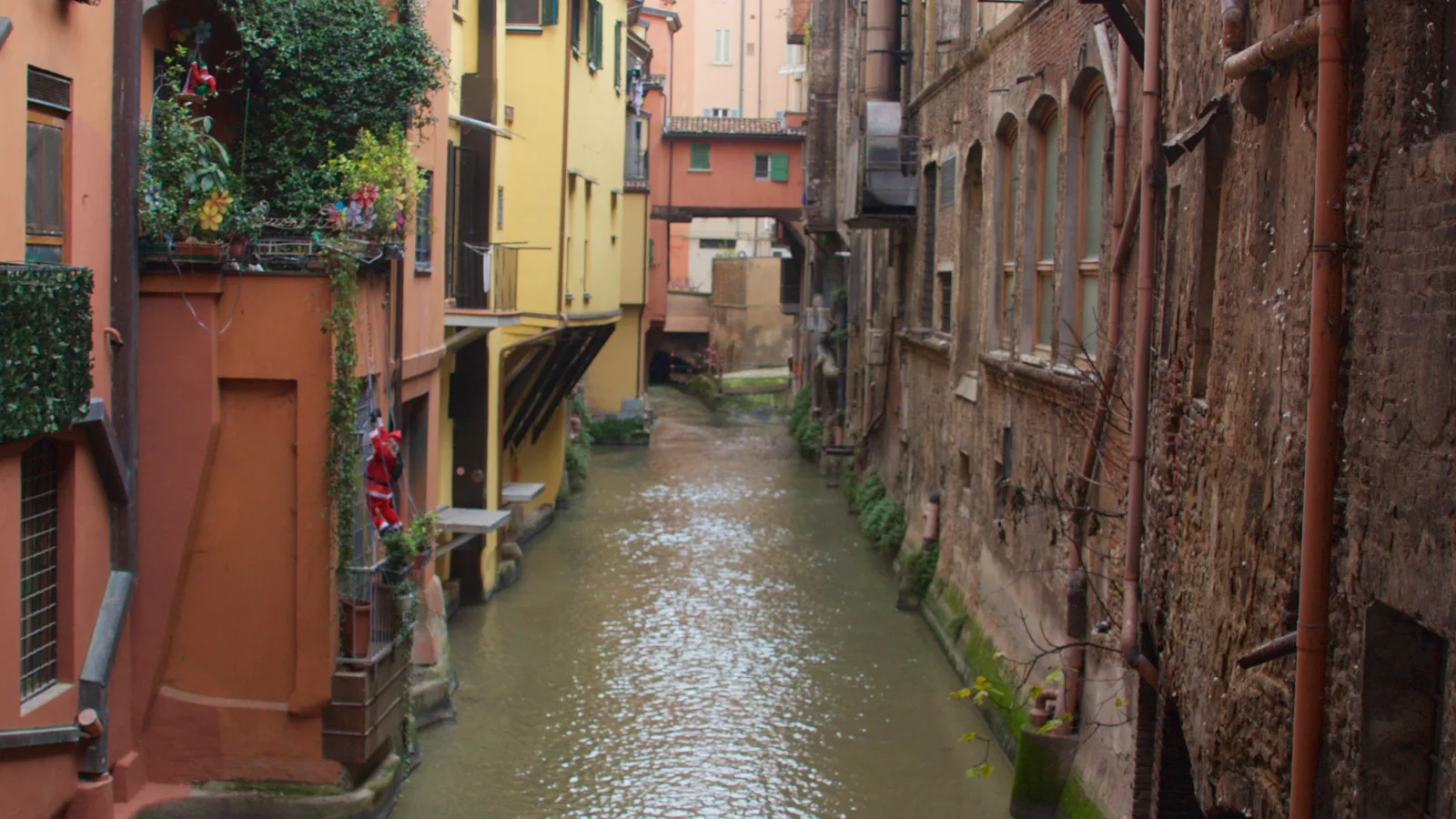
Image: Canale di Reno in Bologna, photograph by Mike Peel, cropped and converted to WebP. Licensed under CC BY-SA 4.0.

Topics
Newsletter
A weekly reading to see the aquatic world with clearer judgment.
Receive short, carefully edited reflections on aquatic life, ethical aquarium keeping, and applied science.
Subscribe