

Rotala rotundifolia: living card for a stem plant
An atlas card for using Rotala rotundifolia with judgement: light, optional CO2, bush trimming, and colour without chasing extremes.
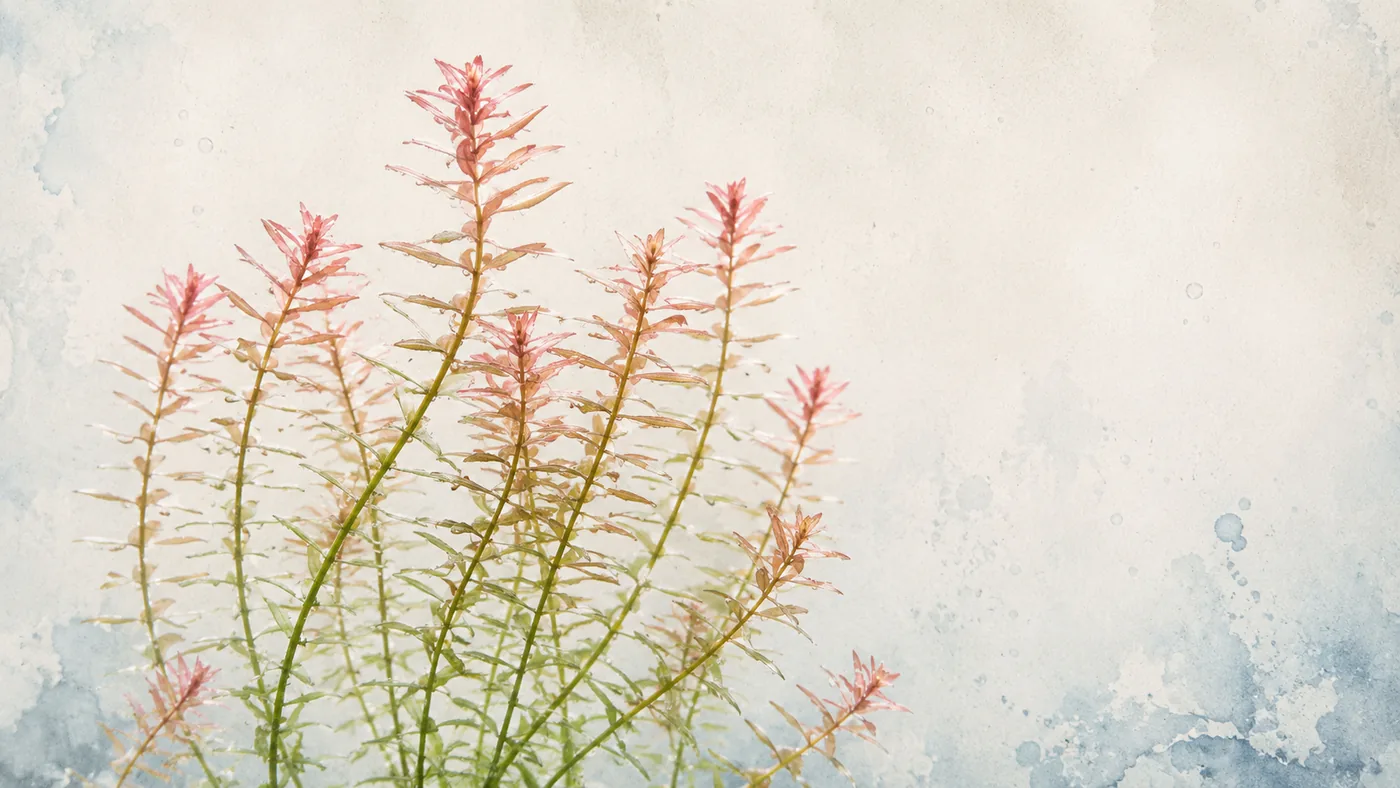
Rotala rotundifolia earns its place in aquascaping through fine bushes, fast response, and colour under the right conditions. Light, nutrients, and trimming decide whether it becomes structure or clutter.
Quick read
- Type: medium-fast stem plant.
- Aquarium: medium or high-tech planted tank, also bright low-tech.
- Indicative temperature: 20-28 C.
- pH: 5.5-7.5.
- Light: medium to high.
- CO2: optional, recommended for dense bushes.
- Planting: grouped stems, trim and replant tops.
- Difficulty: medium; easy to grow, harder to keep compact.
What to check before planting
Look for compact tips, uncrushed stems, and no hair algae. Emersed-grown plants may change leaf form underwater.
During adaptation, old leaves may die back while new shoots appear in a different form. Judge the growth point, not a perfect old leaf.
Planted-tank design
It works as a rear or side bush. Trim in layers so the base receives light instead of becoming a green cloud above bare stems.
The right position prevents future work: slow plants under less light, stem plants with trimming margin, and large plants where they do not block the whole aquarium.
Working parameters
With CO2 and steady dosing it grows denser. Without CO2, reduce expectations of intense colour and avoid excessive light that drives algae.
The plant responds to light, carbon, nutrients, flow, and stability, not to labels like low-tech or high-tech. Change one variable at a time so you can see what worked.
Compatibility and warning
Good with small fish and shrimp. Large fish or strong currents can dismantle freshly trimmed bushes.
Black lower stems, tiny leaves, or twisted tips call for checks on real light, CO2, nitrogen, and micronutrients.
Reference sources
Tropica Aquarium Plants and Kew Plants of the World Online for culture, growth type, and botanical reference. Ranges are indicative and depend on light, nutrients, CO2, and the plant’s original growth form.
Topics
Newsletter
A weekly reading to see the aquatic world with clearer judgment.
Receive short, carefully edited reflections on aquatic life, ethical aquarium keeping, and applied science.
Subscribe