


Paracheirodon innesi: living card for the neon tetra
An atlas card for keeping neon tetras with more respect: a proper group, mature tank, soft light, clean water, and calm companions.
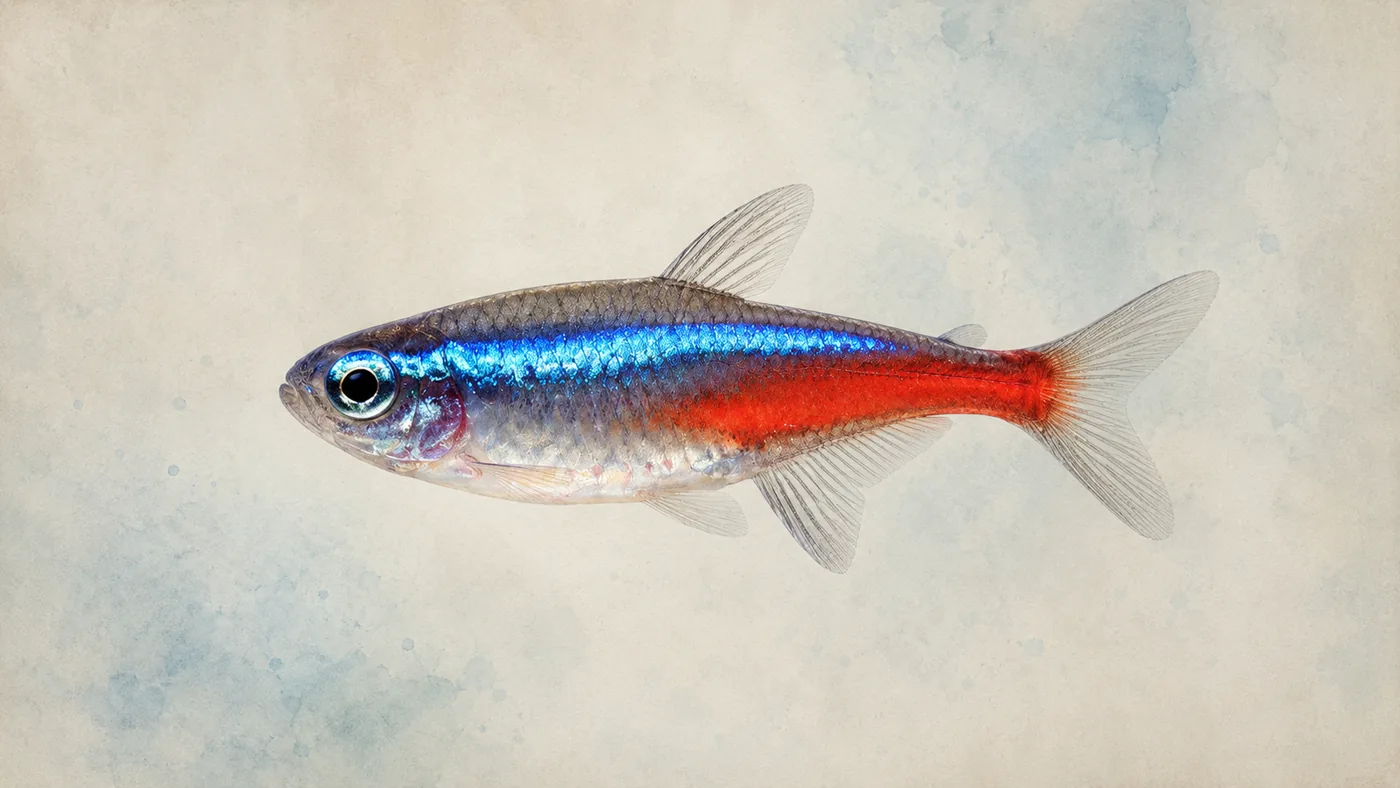
Paracheirodon innesi (neon tetra) is common and inexpensive, but it shows its best in large groups, stable water, and light that does not expose it all day.
Quick read
- Type: small schooling characin.
- Aquarium: mature, planted, with shaded zones and open swimming space.
- Indicative temperature: 22-25 C.
- pH: 6.0-7.2.
- Hardness: soft to moderate.
- Base volume: 60 L for 10 or more fish.
- Feeding: varied micro foods in small portions.
- Difficulty: medium; sensitive in newly started tanks.
What to check before buying
Choose fish with a clean blue line, full body, and coordinated swimming. Avoid isolated, deformed fish or cottony patches.
Before buying, confirm that the aquarium is cycled, the group size or pair plan makes sense, and the setup runs at the species’ real temperature.
Aquarium design
A dark background, fine plants, and wood help the school move confidently. Do not use it as filler in an aggressive aquarium.
Use the card as a baseline, then watch the fish. Loss of colour, constant hiding, or all-day competition calls for a design correction before a chemical fix.
Working parameters
Clean water and a mature filter are critical. Avoid adding neon tetras on day one or to tanks with ammonia spikes.
Treat these ranges as a working zone, not permission to swing parameters. Rapid changes, immature aquariums, and incompatible species cause most problems.
Compatibility and warning
It works with rasboras, small corydoras, and similarly sized peaceful fish. Large fish or cichlids may read it as prey.
Dull colour, rapid breathing, or a constantly scattered group often signals fear, poor water quality, or unsuitable tankmates.
Reference sources
FishBase for taxonomy and distribution; NOAA/University of Florida historical ornamental-trade data for frequent market species; Aquarium Co-Op and specialist aquarium guides for practical husbandry ranges.
Topics
Newsletter
A weekly reading to see the aquatic world with clearer judgment.
Receive short, carefully edited reflections on aquatic life, ethical aquarium keeping, and applied science.
Subscribe