

Euphyllia glabrescens: living card for the torch coral
An atlas card for reading the torch coral before placement: light, flow, aggression, stability, and the limits of keeping Euphyllia in a marine aquarium.
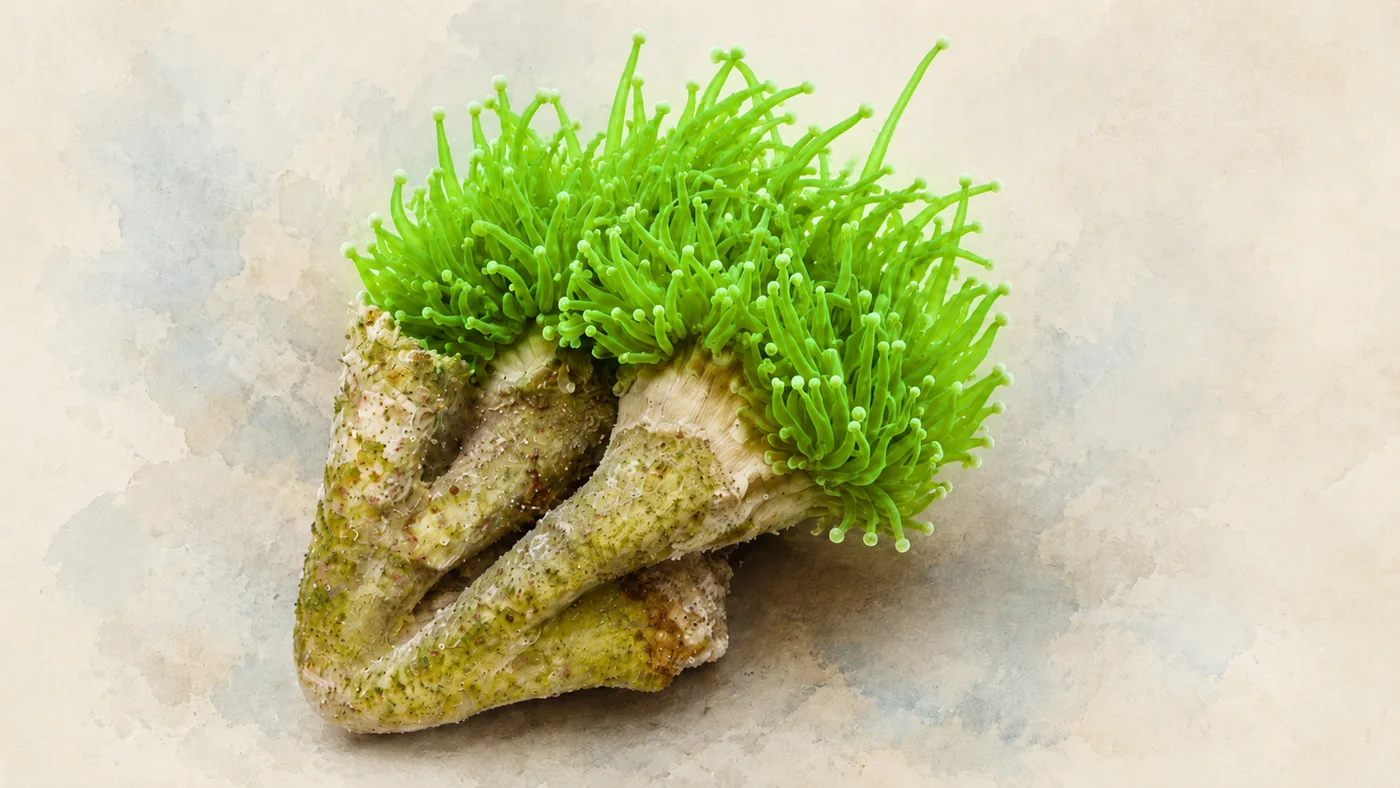
Aquarists often buy torch coral for movement: long tentacles, glowing tips, and a hypnotic presence under blue light. That beauty demands space and stability. Euphyllia glabrescens is an aggressive cnidarian, sensitive to sudden swings, and able to sting neighbours with sweeper tentacles.
Quick read
- Type: large-polyp stony coral (LPS).
- Aquarium: mature marine system with stable parameters and solid nutrient export.
- Light: moderate; too much intensity without acclimation can cause tissue retraction.
- Flow: moderate and indirect, enough to move the polyps without folding them continuously.
- Indicative temperature: 25-27 C.
- Salinity: 1.024-1.026 SG.
- Alkalinity: stable, roughly 8-11 dKH.
- Calcium: roughly 400-450 mg/L.
- Magnesium: roughly 1250-1350 mg/L.
- Difficulty: medium; stability matters more than chasing perfect numbers.
Why it deserves its own card
The torch coral shows why space in a small reef cannot be measured only by visible centimetres. Its polyps expand, shift with flow, and may send stinging tentacles beyond the skeleton. Before placing it, plan a safety zone around the colony and avoid contact with other LPS corals, zoanthids, or soft corals.
The coral reads back to you through its tissue. Inflated tissue, extension, and gently moving tentacles usually indicate a sensible position. A coral that stays retracted for days, lifts tissue near the base, or keeps its mouth open needs a review of light, flow, salinity, nutrients, and recent moves.
Working parameters
This card does not offer a magic number. It offers a stability window. Torch coral can tolerate some differences between mature aquariums, but it handles abrupt corrections poorly. If alkalinity, salinity, or temperature change fast, tissue can retract, detach, or become vulnerable to infection.
In young systems, adding Euphyllia too early is a common mistake. Wait for repeatable parameters over weeks, not one correct test. In a tank with fish, regular feeding, and stable filtration, a well-placed torch coral can grow steadily.
Compatibility and warning
Do not place it in the direct blast of a pump or on a ledge where it can fall onto other corals. Leave margin from fast-growing species and from other aggressive corals. Handle it by the skeleton, never by expanded tissue, and keep air exposure as short as practical.
The main alarm sign is tissue pulling away from the skeleton. At that point, relocation is not enough: review stability, physical damage, pests, excess flow, and general water quality.
Reference sources
WoRMS for Euphyllia glabrescens taxonomy; practical reef guidance from Tidal Gardens and World Wide Corals for husbandry ranges. Values are indicative and must be adapted to the aquarium’s real history.
Topics
Newsletter
A weekly reading to see the aquatic world with clearer judgment.
Receive short, carefully edited reflections on aquatic life, ethical aquarium keeping, and applied science.
Subscribe