

Carassius auratus: living card for the goldfish
An atlas card for moving goldfish beyond the bowl myth: real volume, cool water, strong filtration, and long life.
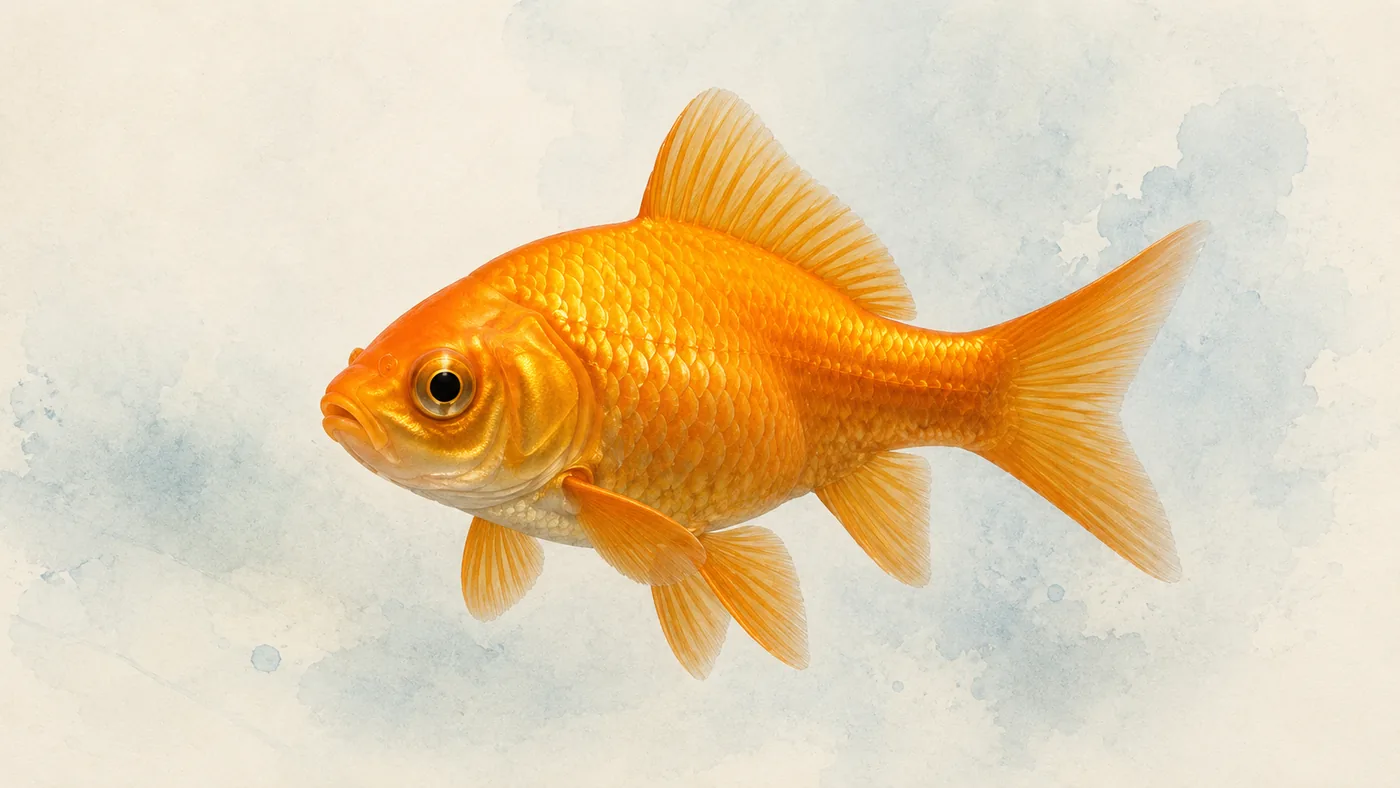
Carassius auratus (goldfish) is one of the most common fish in the trade and one of the most poorly housed. The issue is size, waste, and longevity, not fragility.
Quick read
- Type: cool-water cyprinid with high bioload.
- Aquarium: large, cool, heavily filtered; pond preferred for common varieties.
- Indicative temperature: 18-23 C.
- pH: 7.0-8.2.
- Hardness: moderate to hard.
- Base volume: 120 L for small fancy types; much more for common types.
- Feeding: omnivorous with plant matter, measured portions, and occasional fasting.
- Difficulty: medium; hardy only when given space.
What to check before buying
Choose fish with balanced swimming, clean fins, and proportionate bodies. In fancy types, avoid extreme deformities that compromise breathing or swimming.
Before buying, confirm that the aquarium is cycled, the group size or pair plan makes sense, and the setup runs at the species’ real temperature.
Aquarium design
Prioritize volume, oxygen, and filtration before decoration. Robust plants can work, but many will be uprooted or eaten.
Use the card as a baseline, then watch the fish. Loss of colour, constant hiding, or all-day competition calls for a design correction before a chemical fix.
Working parameters
It is not a tropical fish for permanent 27 C water. Cool temperature, mineralized water, and large regular changes support its metabolism better.
Treat these ranges as a working zone, not permission to swing parameters. Rapid changes, immature aquariums, and incompatible species cause most problems.
Compatibility and warning
Do not mix it with small tropical fish or heat-loving species. Keeping compatible goldfish only avoids predation, thermal stress, and uneven competition.
Gasping, red fins, abnormal buoyancy, or constantly cloudy water indicate a system that is too small or immature.
Reference sources
FishBase for taxonomy and distribution; NOAA/University of Florida historical ornamental-trade data for frequent market species; Aquarium Co-Op and specialist aquarium guides for practical husbandry ranges.
Topics
Newsletter
A weekly reading to see the aquatic world with clearer judgment.
Receive short, carefully edited reflections on aquatic life, ethical aquarium keeping, and applied science.
Subscribe