

The zebra shark that reproduces without a mate: parthenogenesis in captivity
Female zebra sharks have laid fertile eggs with no male present. Parthenogenesis and the species' first artificial insemination open new paths for elasmobranch conservation.
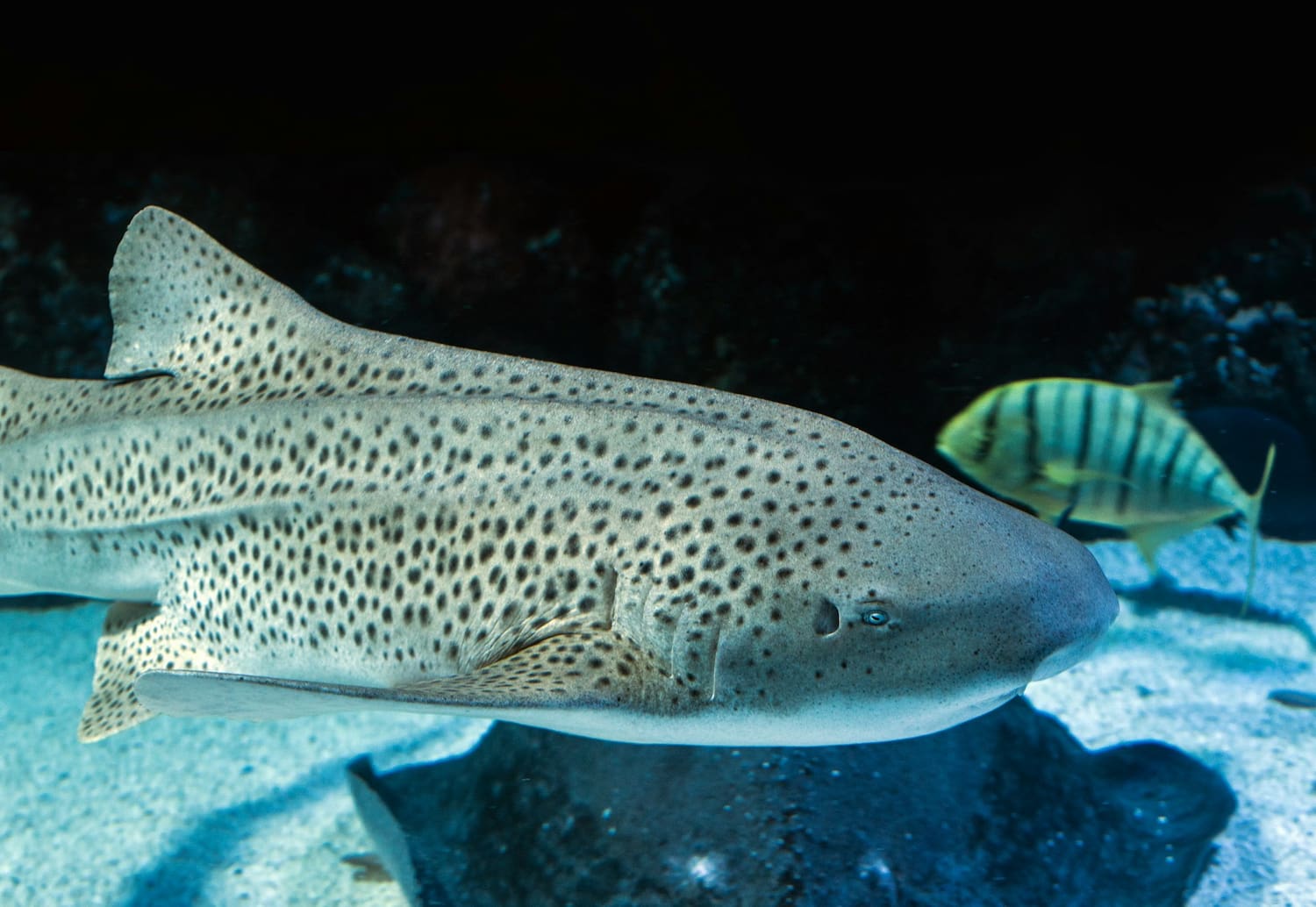
Photo: Davide Clode
In 30 seconds: female zebra sharks (Stegostoma tigrinum) have been documented producing offspring without any contact with a male, through parthenogenesis; in 2022 artificial insemination was performed for the first time in this species; together, these advances are transforming how aquariums can contribute to elasmobranch conservation.
Fertile eggs with no male in sight
In the quiet of an aquarium’s back-of-house area, a female zebra shark does something that challenges what we thought we knew about shark reproduction: she lays eggs, the eggs develop, and live pups emerge from them. There is no male in the facility. There has not been one for years.
The phenomenon has a name: parthenogenesis, a form of asexual reproduction in which an egg develops without being fertilized by sperm. In elasmobranchs (sharks, rays and chimaeras), aquariums have been the setting where this phenomenon has been most rigorously documented, precisely because prolonged absence of males can be certified there1. The zebra shark is one of the species where the evidence has proven most instructive.
What parthenogenesis in sharks actually is
The parthenogenesis observed in sharks does not produce exact clones of the mother. In most documented cases it involves parthenogenesis by automixis: the egg fuses with a polar body (a small sister cell produced during meiosis, the cell division that creates eggs) rather than with a sperm cell. The result is an individual with a reduced genome, derived entirely from the mother but not identical to her.
This carries an important genetic consequence: parthenogenetic offspring show lower genetic diversity than offspring produced through sexual reproduction. It is not an equivalent solution, but rather a biological emergency resource that the species itself seems to activate when conventional reproduction is not possible.
For a long time, researchers debated whether these births were true parthenogenesis or the result of sperm storage (the well-documented ability of sharks to keep viable sperm for months or years after mating). Genetic analysis has made it possible to distinguish the two scenarios: when the offspring completely lacks paternal alleles (gene variants from the father), the explanation is parthenogenesis1.
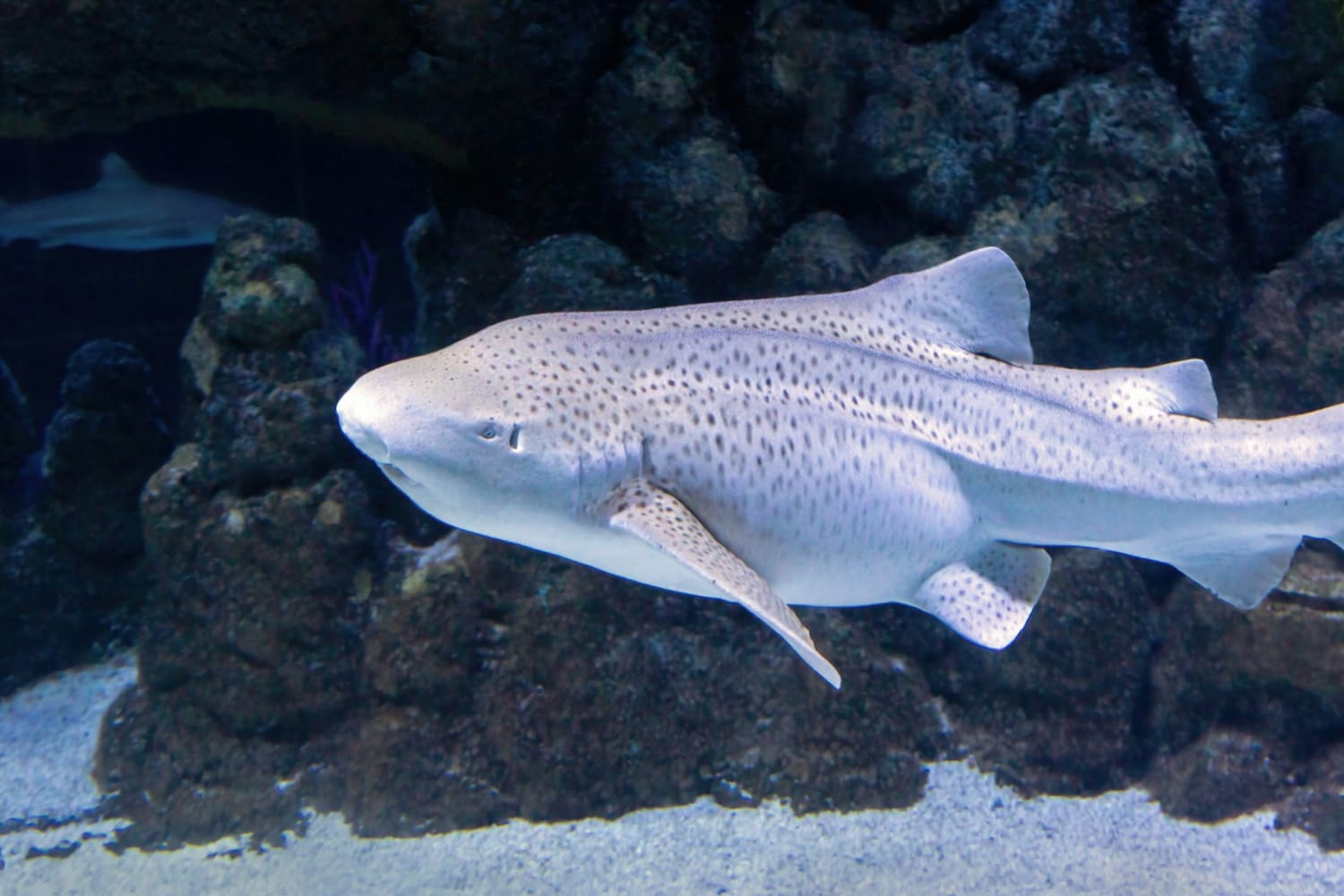
Photo: Davide Clode
Why it happens in captivity
We do not fully know whether parthenogenesis is an artifact of captivity or a natural strategy. What aquariums provide is an involuntary laboratory: females isolated for documented periods that nonetheless produce offspring. In the wild, verifying the absence of males is impossible; in a tank, it is a management record.
This places aquariums in a singular scientific position. As Feldheim, Wyffels and Lyons point out, zoological institutions have driven much of the current knowledge of elasmobranch reproductive biology: hormonal cycles, reproductive ultrasound, sperm storage, parthenogenesis and, more recently, assisted reproductive techniques1. Many of these approaches would be impractical in the open field.
The zebra shark case illustrates the paradox: the very condition that generates the phenomenon (reproductive isolation) is the one that allows it to be studied with precision.
2022: the first artificial insemination in zebra sharks
If parthenogenesis is biology’s improvised answer, artificial insemination is science’s deliberate one. In 2022, a team led by Lauren Adams published in Frontiers in Marine Science the first successful artificial insemination protocol applied to the zebra shark2. The work brings together two research lines that had been advancing separately: characterizing the species’ reproductive cycle and developing assisted reproductive techniques.
Artificial insemination solves a real logistical problem in captive breeding programs: moving adult sharks between institutions is expensive, stressful for the animal and risky. Moving sperm, by contrast, is a far simpler operation. If the protocol matures, two aquariums on different continents could exchange genetic material without any shark boarding a plane.
This matters because the zebra shark is listed as Endangered by the IUCN, with wild populations declining under fishing pressure and habitat degradation across the Indo-Pacific. A genetically managed ex situ breeding program (a breeding program that takes place outside the species’ natural habitat) stops being an exhibit and becomes a conservation tool with the potential to reinforce wild populations.
The reproductive cycle: the missing piece
None of this would be possible without first understanding when a female is ready. The work of Wyffels and colleagues with sand tiger sharks (Carcharias taurus), both in the wild and in aquariums, has established methodologies for characterizing the female reproductive cycle through ultrasound, hormone analysis and systematic observation3. Although the species is different, the methodological approach is transferable: without a reliable reproductive calendar, any insemination attempt is a shot in the dark.
Here again, aquariums are irreplaceable. Repeated monitoring of the same females, week after week, makes it possible to build hormonal curves and follicular maps (records of egg development in the ovaries) that in the wild would require unfeasible capture efforts3.
Neither parthenogenesis nor miracles: the honest limits
It is worth resisting the triumphalist headline. Parthenogenesis does not save species: it produces offspring with diminished genetic diversity, and in documented elasmobranch cases, the long-term viability of parthenogenetic individuals remains an open question1. It is a signal of extraordinary biological plasticity, not a conservation program.
Artificial insemination, for its part, is a young protocol, applied for the first time in this species in 20222. Turning a first success into a routine tool requires replication, refinement and, above all, coordination between institutions: shared studbooks (records of the ancestry and breeding history of captive animals), common genetic goals and clear criteria about what role the captive population plays relative to the wild one.
And no ex situ reproductive advance replaces habitat protection. A zebra shark bred in captivity with no Indo-Pacific reef to live in is an administrative victory, not an ecological one.
What this changes for aquarists and visitors
For those managing collections, the lesson is that every isolated female is a potential scientific data point. Recording laying dates, isolation periods and egg outcomes is no longer just good husbandry: it contributes to a body of evidence that is redefining the reproductive biology of an entire vertebrate group1.
For the aquarium visitor, the lesson is subtler: behind that zebra shark resting on the sand lies a network of protocols, ultrasounds, hormone assays and international exchanges of genetic material. The contemporary aquarium, at its best, is conservation infrastructure that happens to be open to the public.
A question for the reader
Next time you visit an aquarium, will you ask whether the institution takes part in coordinated breeding programs or reproductive research, and let that answer shape which aquariums you support?
Sources
Footnotes
-
Feldheim, K. A., Wyffels, J. T., & Lyons, K. (2022). “The role of aquaria in the advancement of elasmobranch reproductive biology”. Frontiers in Marine Science, 9. DOI: 10.3389/fmars.2022.963542 ↩ ↩2 ↩3 ↩4 ↩5
-
Adams, L., et al. (2022). “Artificial Insemination and Parthenogenesis in the Zebra Shark Stegostoma tigrinum”. Frontiers in Marine Science, 9. DOI: 10.3389/fmars.2022.886616 ↩ ↩2
-
Wyffels, J. T., et al. (2022). “Reproductive Cycle and Periodicity of In Situ and Aquarium Female Sand Tiger Sharks Carcharias taurus from the Western North Atlantic”. Frontiers in Marine Science, 9. DOI: 10.3389/fmars.2022.925749 ↩ ↩2
Topics
Newsletter
A weekly reading to see the aquatic world with clearer judgment.
Receive short, carefully edited reflections on aquatic life, ethical aquarium keeping, and applied science.
Subscribe