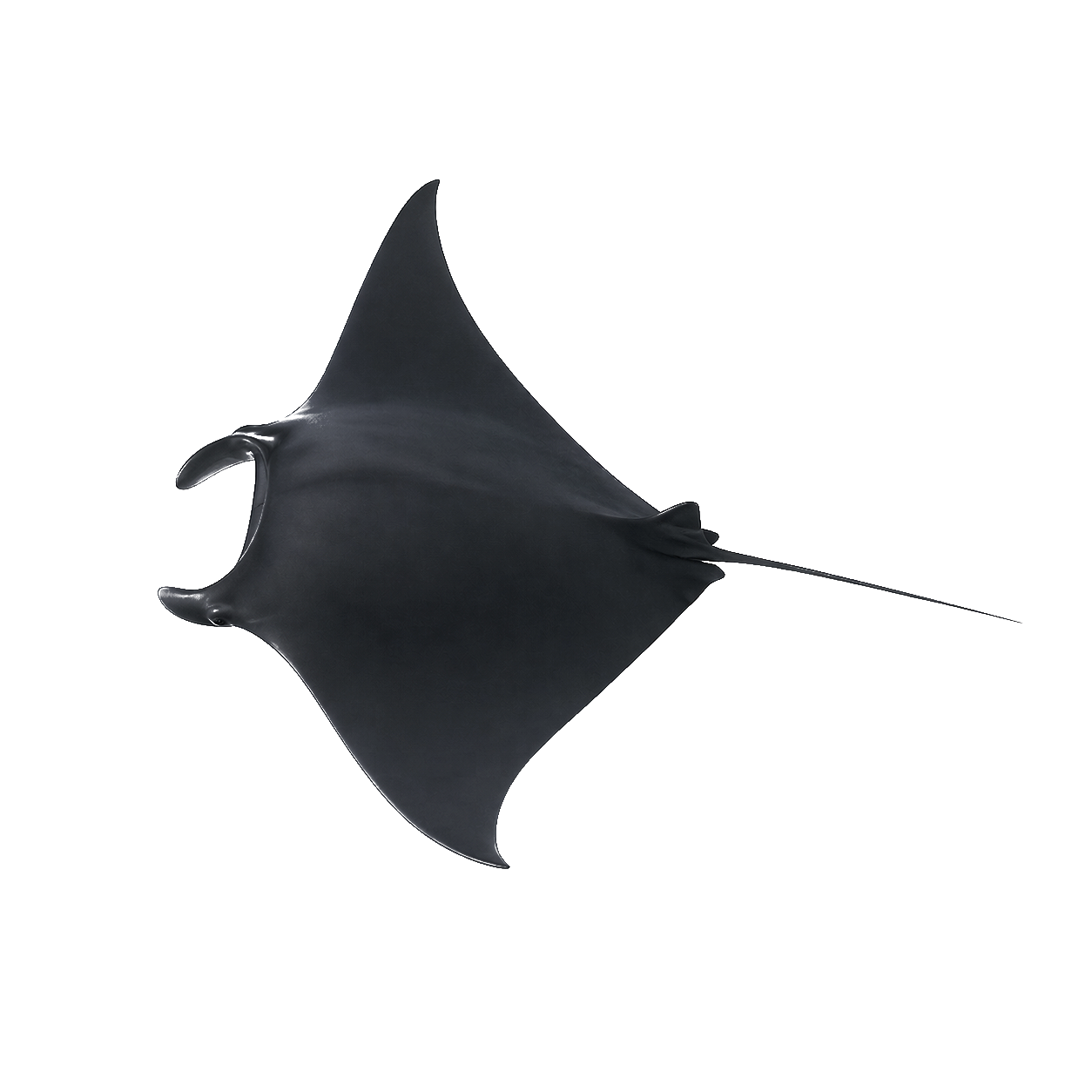


The Invisible Cathedral: Caribbean Coral Reefs and the Herbivores That Defend Them
In the Caribbean, coral reefs depend on herbivores as much as on coral itself. Parrotfish, sea urchins, and king crabs keep algae in check so light can reach the living architecture.
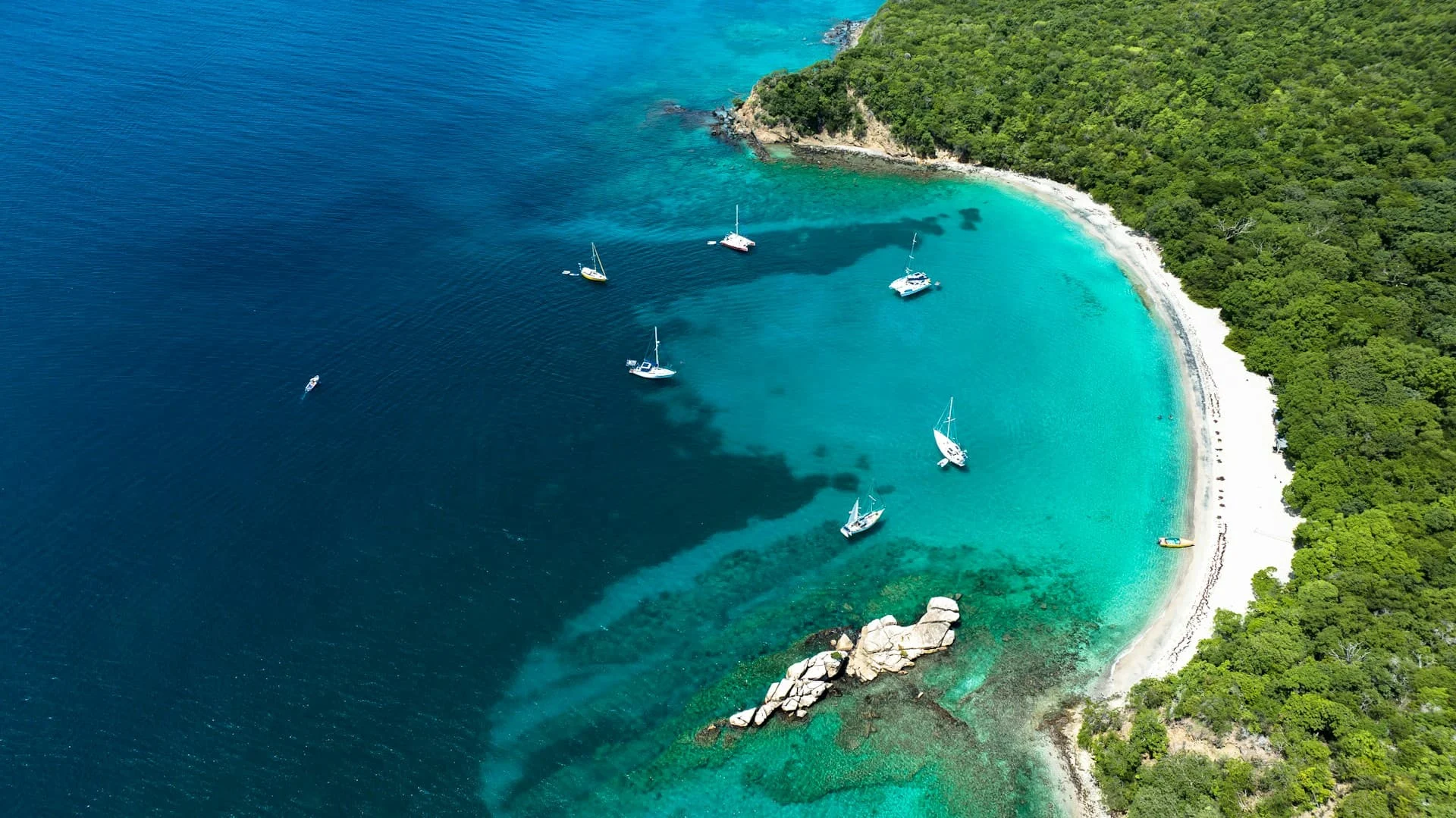
From above, the Caribbean offers a sharp palette: waters shifting from sapphire blue to electric turquoise, coral sandbanks drawing lines between seas, dark shadows hinting at depth. The marvel begins just before the light fades. Between four and fifteen meters down rises a living cathedral: pillars of Acropora filter green and amber light, parrotfish scrape rock with horny beaks, and black sea urchins move across the coral floor.
This is the Caribbean’s invisible cathedral. It has no bell tower, yet sound carries through it; no stained glass, yet light fractures across millions of living surfaces. Like any cathedral, it needs maintenance.
The Threat That Does Not Shout
The degradation of Caribbean coral reefs often arrives without the drama of a hurricane or visible plague. Macroalgae spread, dim the light, smother coral recruits, and turn a three-dimensional landscape into a flat green meadow. When algae dominate, the reef ecosystem loses its architecture.
Several causes reinforce one another. Ocean warming kills coral; overfishing removes the herbivores that kept it clean; land runoff delivers nutrients that fertilize the algae we do not want to grow. The result is a phase shift from coral-dominated reef to algae-dominated reef, and ecological inertia makes the return difficult.1
The Herbivores: An Invisible Army
If coral is the architecture, herbivores are the maintenance crew. Parrotfish, surgeonfish, sea urchins, and crabs browse on the algae growing between corals, preventing aquatic vegetation from occupying the space coral needs for light and larval recruitment. On healthy reefs, this interaction is so constant it goes unnoticed until it stops.2
Research on Caribbean reefs has shown that when herbivores disappear, algae can cover more than 90 % of available substrate within months. When they return, algal cover can drop within weeks. The change comes from attrition: millimeter by millimeter, bite by bite, with day and tide.3
Parrotfish: The Stonemasons
With fused jaws that form a horny beak adapted for scraping algae from rock, parrotfish (Scaridae) are among the most visible herbivores of the reef landscape. They are noisy fish in electric blues, lime greens, and impossible pinks. Their importance lies in the work they do on the substrate. A single parrotfish can clear large areas of turf algae in a few hours, leaving clean rock where a coral recruit can settle and grow.4
Evidence from Belize’s marine reserves shows that after reserve establishment, parrotfish populations recovered faster than predicted and more strongly than other functional groups. These fish are sensitive to fishing, but they are also fecund and fast-growing once human pressure eases.5
Diadema antillarum: The Shadow That Grazes
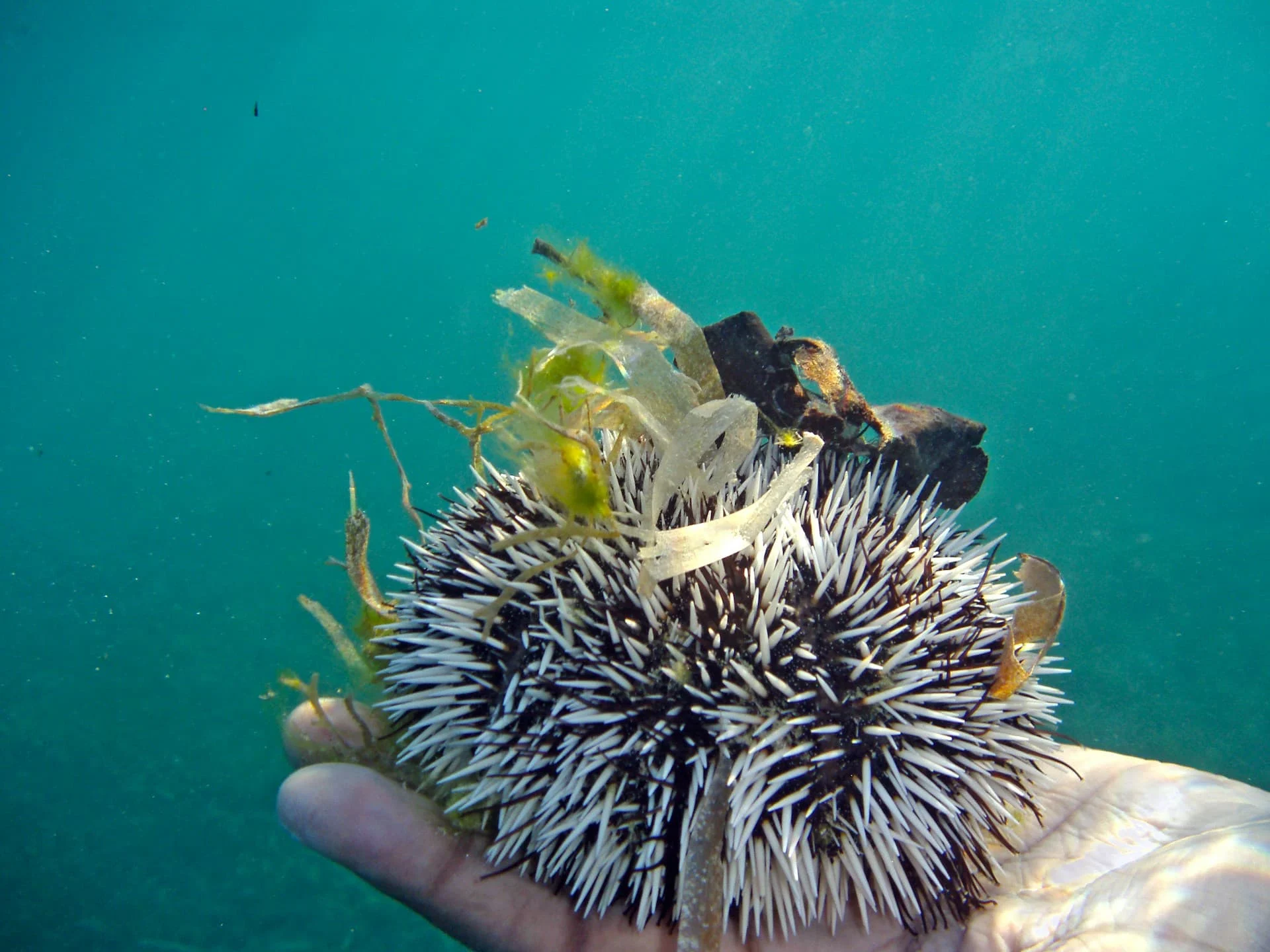
If parrotfish are the daytime gardeners, Diadema antillarum, the long-spined black sea urchin, is the nocturnal grazer. This echinoderm lives in crevices and holes within the reef by day and emerges to graze at dusk, moving on tube feet and clipping algae with remarkable efficiency. Historically, Diadema was probably the Caribbean’s most important herbivore: before 1983, these urchins may have consumed as much algae as all the region’s herbivorous fishes combined.6
In 1983, an unknown disease decimated Diadema populations across the Caribbean within months. Researchers estimate that over 95 % of individuals died, leaving reefs without their primary herbivorous defense line. Algal cover exploded across dozens of sites, and many never recovered their previous balance.7 Thirty years later, Diadema began rebounding in some areas, but a 2022 mass mortality event cut populations again and exposed the risk of depending on a keystone species.8
Caribbean King Crabs: The Necessary Skeptics
Beyond fish and urchins, another actor has gained prominence in recent years: the Caribbean king crab (Maguimithrax spinosissimus). This large crab is a voracious herbivore specialized on macroalgae that fish and urchins typically avoid. Reintroduction experiments on macroalgae-dominated Caribbean reefs showed that adding king crabs at reasonable densities can partially reverse the algal-to-coral transition on short timescales.9
Unlike Diadema, king crabs are less susceptible to mass disease events and can be raised in captivity for outplanting to the wild. This makes them promising candidates for assisted restoration, as an initial push to help an overfished reef cross the recovery threshold rather than a replacement for natural dynamics.10
Restoration That Is Not Only Coral
For decades, Caribbean reef restoration focused mainly on two strategies: coral fragment outplanting and land-based pollution reduction. Both are essential, but current scientific evidence points to a third pathway: restoring natural herbivory.11
Reviews of herbivore-based restoration indicate that fish, urchins, and crabs are not interchangeable. Each group controls algae of different type, size, and location on the reef. Parrotfish reduce turf and encrusting algae; Diadema controls fine algal filaments; king crabs remove the woody macroalgae no one else touches. Successful recovery appears to require an assemblage of herbivores covering all algal niches of the reef.12
This has direct implications for aquarium keeping. A reef aquarium without herbivores functions like a cathedral without maintenance: beautiful for weeks, overgrown with algae within months. Hobbyists who understand the ecological function of these organisms, and choose them for that role rather than for color alone, apply at glass scale the same rule that keeps the Caribbean alive.
The Last Guardians of the Light
At sunset, on a recovering Caribbean reef, the last rays slant between the branches of Acropora, and the water turns green-amber. From the crevices, urchins begin to emerge, slow and determined. Above, a school of parrotfish passes, leaving trails of clean rock. Below, a king crab lumbers across a bed of Sargassum, tearing it apart.
None of these animals knows it is saving a cathedral. The work still matters: light keeps entering, coral keeps recruiting, and the living architecture endures because something keeps clearing space for it.
A Question for the Reader
The next time you look at a reef, ask yourself: who keeps the light clear enough for coral to grow?
Sources
Methodological note: algal cover figures and consumption rates come from the cited studies; where no single numerical consensus exists, a descriptive range is used to avoid spurious precision. The >95 % Diadema mortality figure derives from Lessios (2016), which synthesizes regional censuses, not a single census study.
Footnotes
-
Butler et al., “Restoration of herbivory on Caribbean coral reefs: are fishes, urchins, or crabs the solution?”, Frontiers in Marine Science, 11, 1329028 (2024). DOI: 10.3389/fmars.2024.1329028. [Review; high reliability] ↩
-
Butler et al. (2024), sections 3 and 4. ↩
-
Butler et al. (2024). Reductions in algal cover following herbivore repopulation are documented in studies reviewed by the authors. Exact figures depend on site and species. ↩
-
Cox et al., “Recovery of parrotfish populations in Belize following marine reserve establishment”, Current Biology, 23(20), R892–R893 (2013). DOI: 10.1016/j.cub.2013.08.043. [Primary; high] ↩
-
Cox et al. (2013). ↩
-
Lessios, “The great Diadema antillarum die-off: 30 years later”, Annual Review of Marine Science, 8, 267–286 (2016). DOI: 10.1146/annurev-marine-010814-020240. [Review; high] ↩
-
Lessios (2016). The >95 % mortality estimate comes from multiple regional censuses synthesized in this review. ↩
-
Hylkema et al., “The 2022 Diadema antillarum mass mortality event across the Caribbean”, Frontiers in Marine Science, 10, 1167292 (2023). DOI: 10.3389/fmars.2023.1167292. [Primary; high] ↩
-
Spadaro & Butler, “Stocking experiments with Caribbean king crab on macroalgal-dominated reefs”, Coral Reefs, 40, 1219–1232 (2021). DOI: 10.1007/s00338-021-02111-4. [Primary; high] ↩
-
Spadaro & Butler (2021). The viability of rearing Maguimithrax spinosissimus in captivity for outplanting is discussed as a potential practical application. ↩
-
Butler et al. (2024), section 7. The review argues that herbivore restoration is a necessary complementary strategy, not a substitute for coral outplanting or nutrient management. ↩
-
Butler et al. (2024), section 8. The authors emphasize that fish, urchins, and crabs control distinct algal types and that the combination appears more effective than any single group. ↩
Topics
Newsletter
A weekly reading to see the aquatic world with clearer judgment.
Receive short, carefully edited reflections on aquatic life, ethical aquarium keeping, and applied science.
Subscribe