

Zoanthus spp.: living card for zoanthids
An atlas card for placing zoanthids without trivializing them: colonial growth, moderate light, pests, toxins, and expansion space.
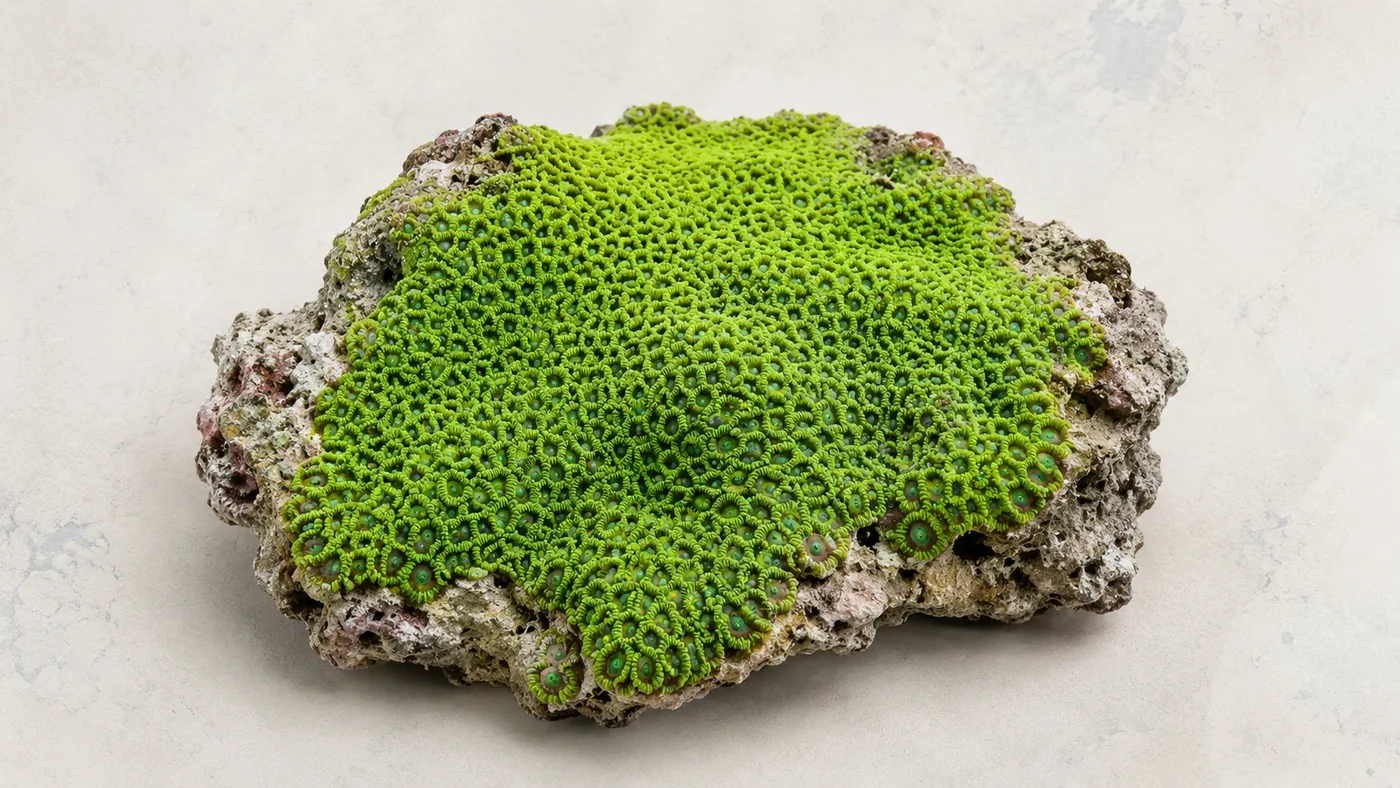
Zoanthus spp. (zoanthids) provide fast colour, but each colony is living tissue that may close from pests, swings, or irritation.
Quick read
- Type: colonial soft coral/zoantharian.
- Aquarium: mature stable reef with non-zero nutrients.
- Light: low to moderate, adjusted by morph.
- Flow: moderate and irregular, without settled debris.
- Indicative temperature: 24-26 C.
- Salinity: 1.024-1.026 SG.
- Alkalinity: 8-10 dKH.
- Calcium: 400-450 mg/L.
- Difficulty: low-medium; pests and handling matter.
What to check before placing it
Check for open polyps, a base free of invasive algae, and no zoanthid nudibranchs or spiders. Always handle with protection.
Before gluing a colony, think about its future size, the direction of flow, and whether you could remove it without dismantling half the rockwork if something goes wrong.
Placement and coral reading
Isolate valuable or invasive colonies on manageable rocks. If they grow onto the main structure, later removal can be difficult.
Read the first week outside the blue-light photo. Watch extension, tissue, response to flow, and irritation signs when the aquarium is in its normal rhythm.
Working parameters
They do not need sterile water. An overly clean reef may close them; a dirty reef favours algae and bacteria. Seek stability, not extremes.
In a reef, stability means repetition: salinity, alkalinity, temperature, and nutrients inside a window the aquarium can sustain, not perfect numbers from one test.
Compatibility and warning
Keep distance from corals that shade or sting them. Do not cut or scrub colonies without safe protocols due to palytoxin risk.
Prolonged closure, brown film, or disappearing polyps require checks for pests, unmeasured iodine, recent light changes, and stability.
Reference sources
WoRMS for taxonomic reference; LiveAquaria, Tidal Gardens, and specialist reef guides for practical light, flow, and stability ranges. Values are indicative and must be adapted to the real history of the system.
Topics
Newsletter
A weekly reading to see the aquatic world with clearer judgment.
Receive short, carefully edited reflections on aquatic life, ethical aquarium keeping, and applied science.
Subscribe