

Mikrogeophagus ramirezi: living card for the ram cichlid
An atlas card for keeping ram cichlids with better judgment: high temperature, soft water, stable pair dynamics, cover, and compatibility limits.
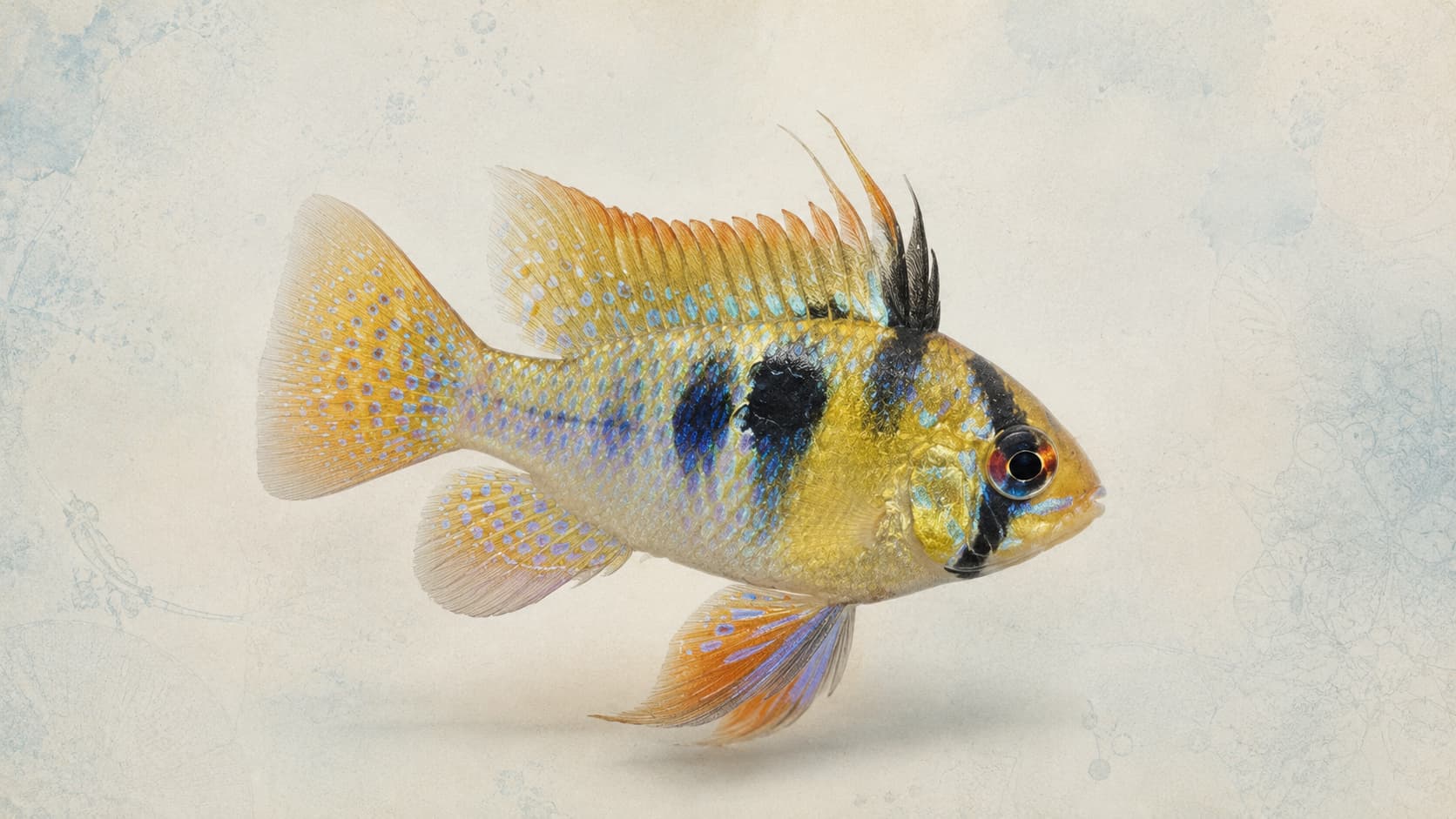
The ram cichlid is small and demanding. Mikrogeophagus ramirezi comes from warm, soft, quiet waters in the Orinoco basin. Shops sell it as a blue and yellow jewel for community aquariums; in practice it needs high temperature, calm tankmates, and a level of stability many young aquariums do not yet have.
Quick read
- Type: South American dwarf cichlid.
- Aquarium: mature planted tank with cover, fine sand, and visually separated zones.
- Indicative temperature: 27-30 C.
- pH: 5.5-6.8 as a preferred zone.
- Hardness: soft to moderate; avoid very hard water.
- Base volume: 60 L for a stable pair; more with other territorial fish.
- Feeding: varied, with high-quality frozen or live food as support.
- Difficulty: medium-high; sensitive to unstable water and poor sourcing.
What to check before buying
A healthy ram shows more than colour. It should breathe calmly, hold its fins open, respond to the environment, and show no sunken belly. Fish that are too small, apathetic, or pushed by extreme selection often have less adaptive margin.
The common mistake is buying a pair on impulse and adding it to a cool, hard, very active community. The fish survives for a few weeks, loses colour, hides, and then becomes ill. This card interrupts that sequence.
Aquarium design
Think thermal and visual calm. Rams benefit from fine sand, leaves, roots, low plants, and zones where a pair can define territory without chasing the whole aquarium. Flow should oxygenate without turning the bottom into a constant current.
The high temperature limits tankmates. Many popular planted-tank species prefer cooler water; not all should live with rams. Choose calm fish that tolerate the same thermal range, and avoid fin nippers, nervous species, or cichlids competing for the bottom.
Working parameters
The priority is stable, clean water. Regular changes, controlled nitrate, and mature filtration matter more than adjusting pH with bottled fixes. If tap water is hard, plan an RO mix before buying the fish, not after.
Compatibility and warning
A pair may defend an area during courtship or spawning. That is biology, not a temperament flaw. The aquarium needs space and visual barriers so territorial behaviour does not become constant pursuit.
Warning signs include rapid breathing, loss of appetite, persistent white faeces, a sunken belly, or isolation. With such a sensitive fish, waiting “to see if it improves” often closes options.
Reference sources
FishBase for Mikrogeophagus ramirezi distribution and taxonomy; Seriously Fish and specialist dwarf-cichlid guides for husbandry ranges. Values are indicative and should be cross-checked with source, age, and the real state of the fish.
Topics
Newsletter
A weekly reading to see the aquatic world with clearer judgment.
Receive short, carefully edited reflections on aquatic life, ethical aquarium keeping, and applied science.
Subscribe