
Marine Gammarids: Tiny Crustaceans Closing the Loop in Aquaculture
Small crustaceans can turn aquaculture waste into protein- and omega-3-rich biomass, opening a practical route toward more sustainable food in aquariums and farms.
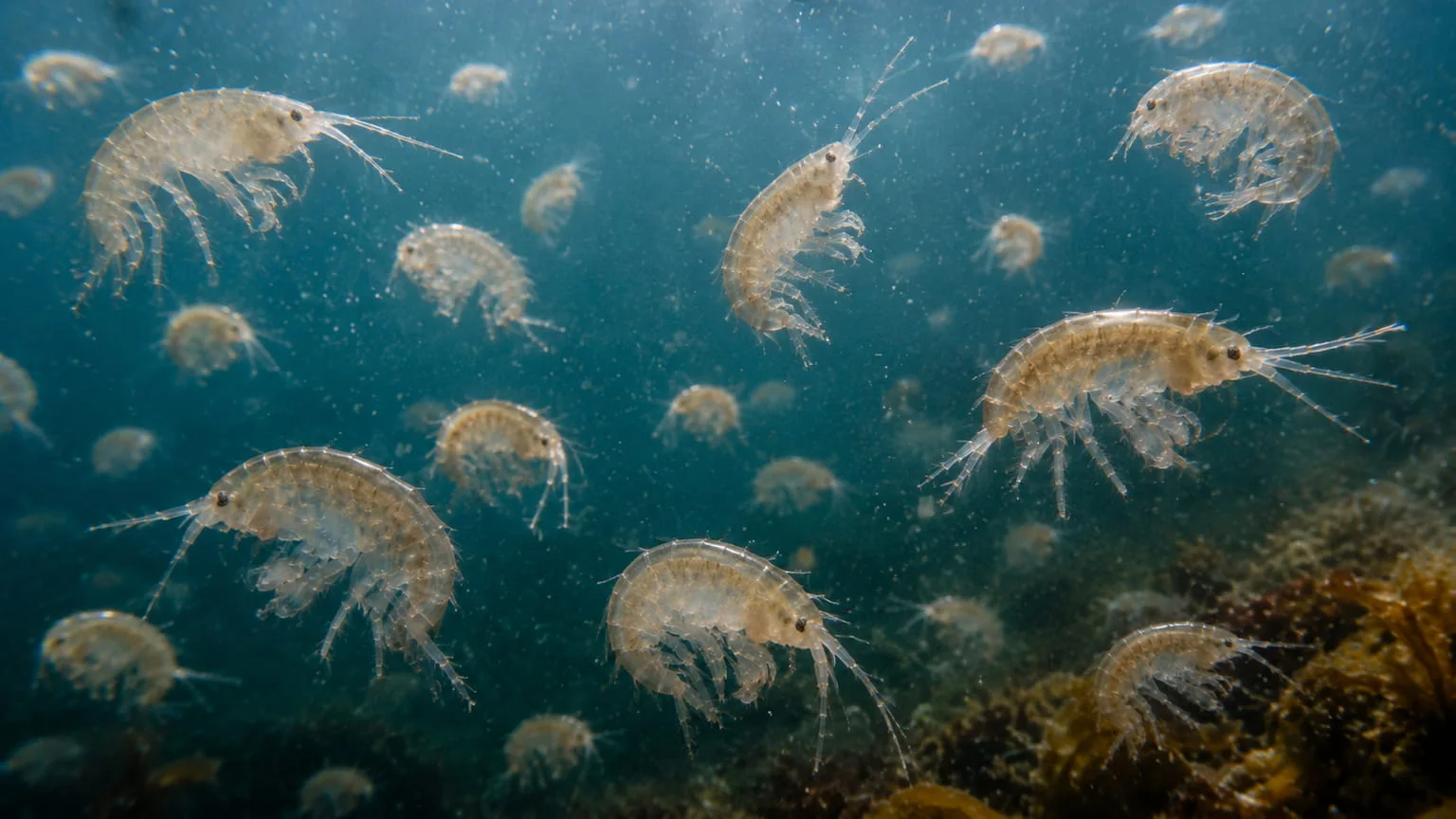
In marine farms and intensive aquaculture systems, organic waste such as fish faeces, uneaten feed, and unharvested biomass creates economic and ecological pressure. Marine gammarids can turn those discarded nutrients into high-value living biomass.
What are gammarids?
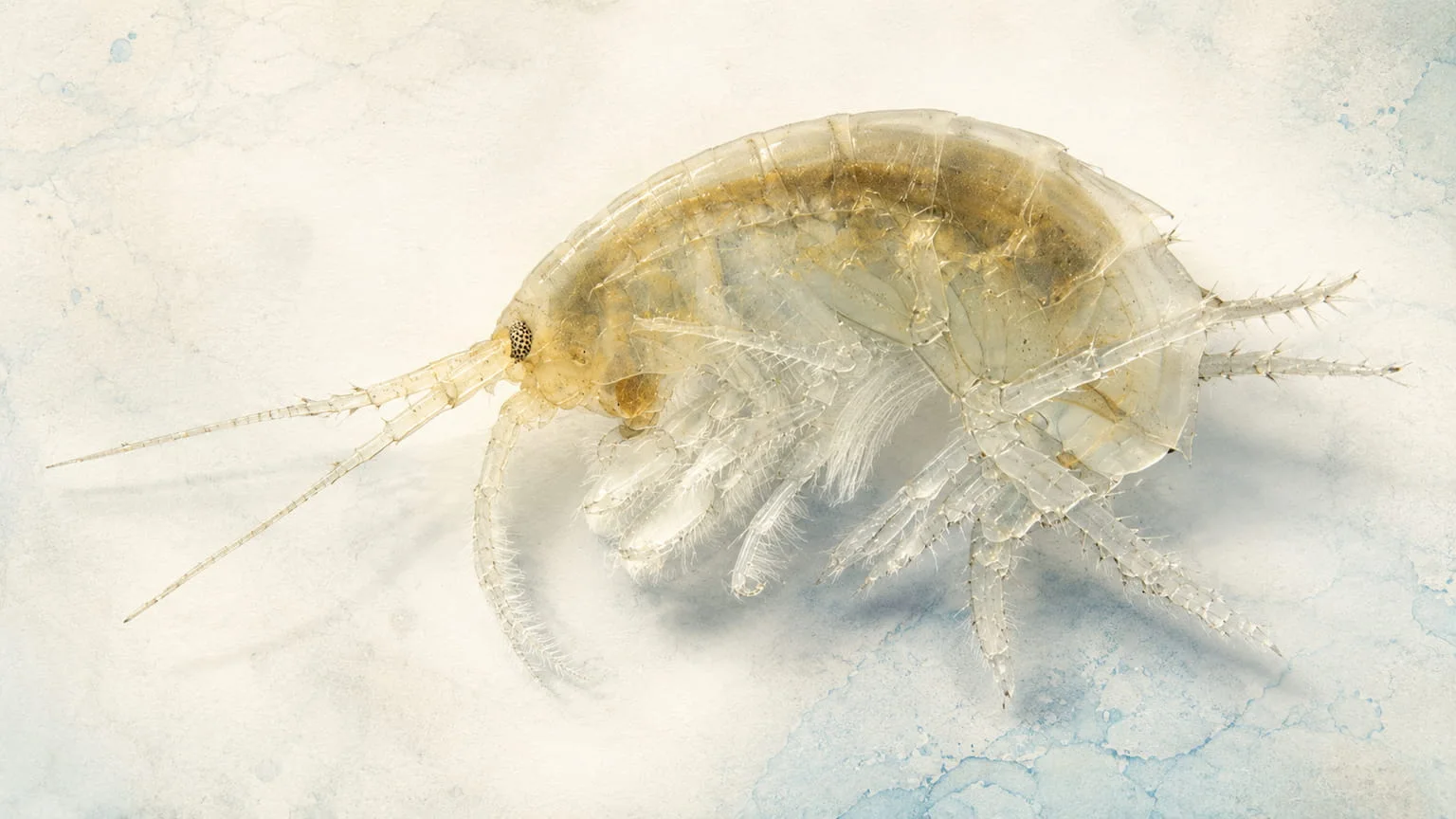
Gammarids are amphipods, laterally compressed crustaceans without a calcified carapace, found in marine bottoms, estuaries, and freshwaters worldwide. They range from a few millimetres to about two centimetres in length. As opportunistic detritivores, they feed on decaying organic matter, microalgae, and organismal debris.
In natural ecosystems they serve a critical function as nutrient recyclers and prey for fish, birds, and invertebrates. In aquaculture, their ability to process organic waste and convert it into protein- and omega-3-rich biomass makes them natural candidates for circular aquaculture systems.
From waste to live feed
Circular aquaculture systems, especially Integrated Multi-Trophic Aquaculture (IMTA), mimic natural cycles by reusing one species’ by-products as inputs for another. In this framework, gammarids work as a biological bridge: they ingest nutrients that would otherwise be lost and turn them into bodies that feed juvenile fish, crustaceans, and invertebrates.
Recent studies suggest that certain marine gammarid species can grow in culture conditions using aquaculture waste as a food substrate (Calado et al., 2025; Castilla-Gavilán et al., 2024). The process reduces the system’s organic load and recovers nutrients as live feed, decreasing reliance on imported fishmeal and supporting a more closed trophic chain.
According to the FAO, the transition to circular-economy models is among the most promising pathways for making global aquaculture growth sustainable (FAO, 2024).
Why should an advanced aquarist care?
For a marine aquarist, the gammarid belongs inside the home aquarium conversation. Its ecology offers three practical lessons:
-
The trophic chain crosses the tank glass. Waste produced by fish and invertebrates is potential nutrients. In systems with macroalgae refugia, live rock, or deep substrate zones, natural amphipod populations, gammarids included, help recycle that organic matter.
-
Live feed carries ecological information. When a fish hunts an amphipod, it ingests proteins, lipids, and an enzymatic and microbial payload that commercial processed feeds cannot fully replicate. Although no validated home-culture recipe works for all aquariums, research links dietary diversification with better reproductive and immune health in marine organisms.
-
Sustainability begins with observation. Knowing what organisms inhabit an aquarium’s refugium or sump allows the aquarist to make informed decisions about bioload, nutrient flow, and maintenance needs. Gammarids are indicators: if they thrive, organic matter is cycling; if they vanish, the system may be too sterile or, conversely, overloaded.
Limits and responsibility
No gammarid-culture technique is sufficiently standardised to recommend for home use without microbiological controls, specific training, and water-quality parameter monitoring. Biosecurity is a real boundary: introducing unknown home cultures into an established aquarium can introduce pathogens or disrupt the system’s microbial dynamics.
Read this as a prompt for observation, not as a husbandry guide. Scientific aquaculture has begun assembling this ecological piece; aquarists can learn from it without improvising unsafe cultures at home.
What will you do with this information?
The next time you spot tiny crustaceans moving among your live rock, read them before removing them. They may tell you whether your aquarium behaves like an ecosystem or only imitates one visually.
Topics
Newsletter
A weekly reading to see the aquatic world with clearer judgment.
Receive short, carefully edited reflections on aquatic life, ethical aquarium keeping, and applied science.
Subscribe