

Corydoras aeneus: living card for the bronze corydoras
An atlas card for caring for corydoras without treating them as cleaners: group size, fine sand, dedicated food, and a safe bottom.
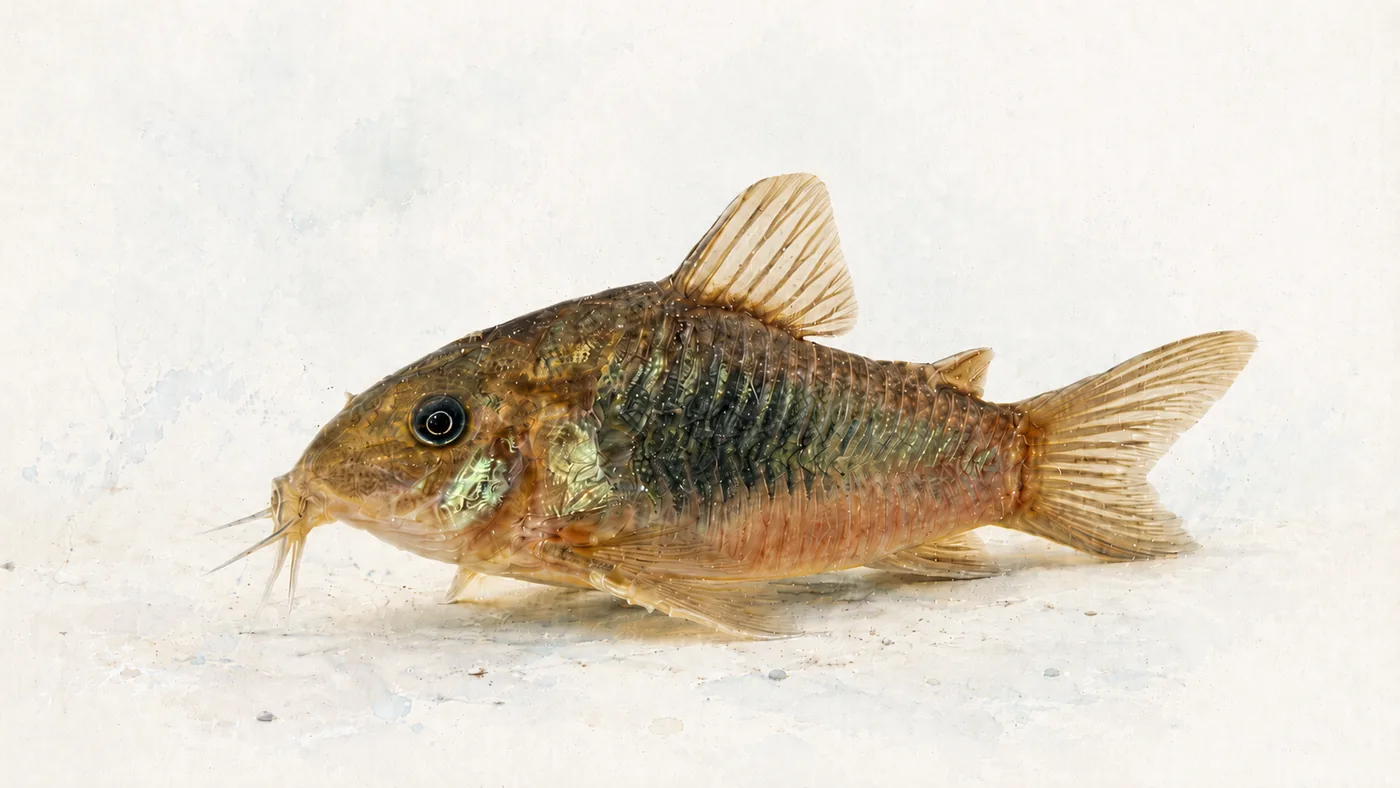
Corydoras aeneus (bronze corydoras) seems useful because it works the bottom, but it does not live on leftovers. It needs a group, its own food, and intact barbels.
Quick read
- Type: schooling bottom-dwelling callichthyid catfish.
- Aquarium: planted or peaceful community tank with fine sand.
- Indicative temperature: 22-26 C.
- pH: 6.5-7.8.
- Hardness: soft to moderate.
- Base volume: 80 L for 6 or more fish.
- Feeding: sinking foods, fine frozen food, and varied diet.
- Difficulty: low-medium; strongly substrate-dependent.
What to check before buying
Check for complete barbels, rounded belly, and group activity. Avoid fish with eroded snouts or laboured breathing.
Before buying, confirm that the aquarium is cycled, the group size or pair plan makes sense, and the setup runs at the species’ real temperature.
Aquarium design
Fine sand protects natural foraging. Sharp gravel, dirty bottoms, and low oxygen turn a hardy fish into a sick one.
Use the card as a baseline, then watch the fish. Loss of colour, constant hiding, or all-day competition calls for a design correction before a chemical fix.
Working parameters
It tolerates a range, but not chronic high nitrate or harsh medication. Siphon without sterilizing the entire bottom.
Treat these ranges as a working zone, not permission to swing parameters. Rapid changes, immature aquariums, and incompatible species cause most problems.
Compatibility and warning
It works with peaceful midwater fish. Avoid cichlids that defend the bottom or species that compete violently for food.
Shortened barbels, red bellies, or frequent surface dashes require checks on substrate, oxygen, and organic load.
Reference sources
FishBase for taxonomy and distribution; NOAA/University of Florida historical ornamental-trade data for frequent market species; Aquarium Co-Op and specialist aquarium guides for practical husbandry ranges.
Topics
Newsletter
A weekly reading to see the aquatic world with clearer judgment.
Receive short, carefully edited reflections on aquatic life, ethical aquarium keeping, and applied science.
Subscribe