

Bucephalandra pygmaea: living card for a rhizome plant
An atlas card for using Bucephalandra pygmaea without burying or forcing it: low light, slow growth, exposed rhizome, and patience.
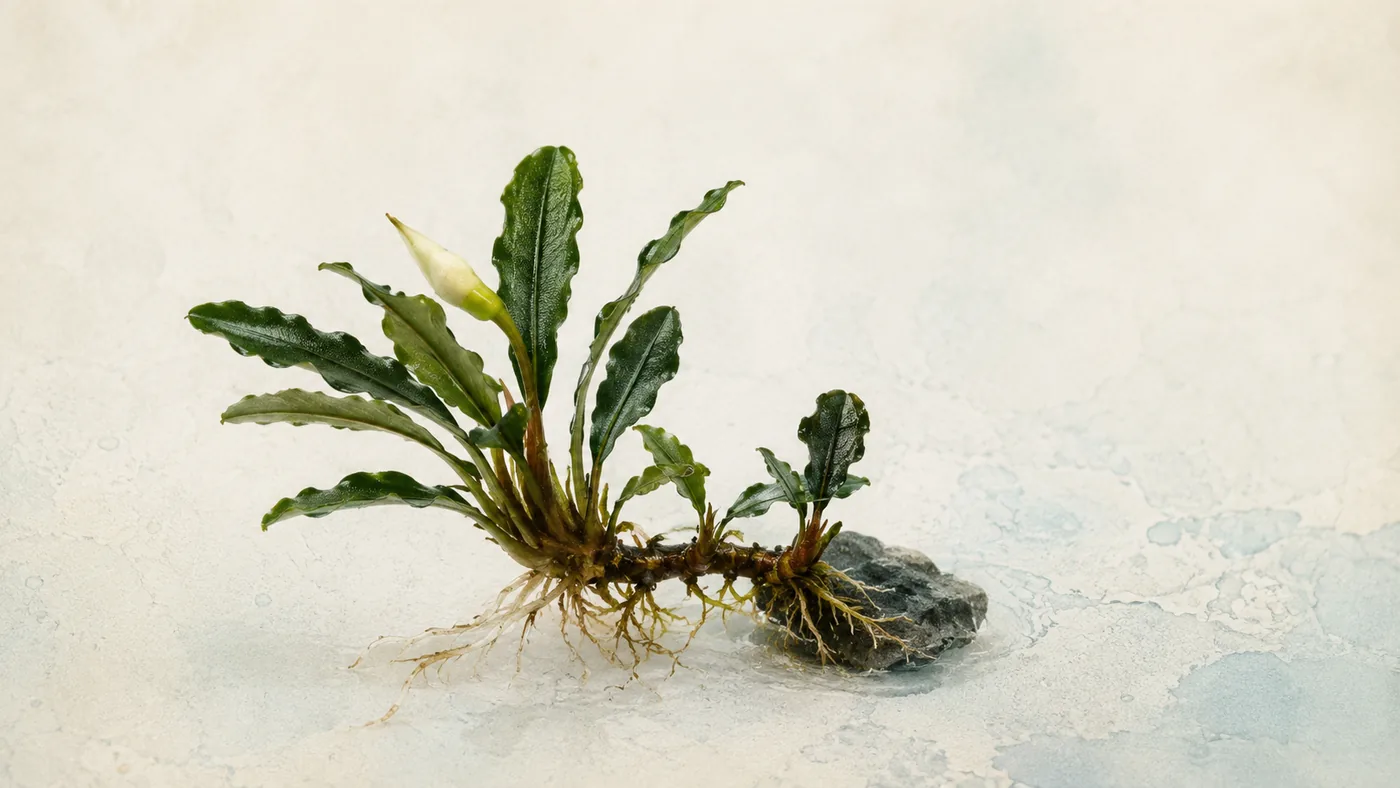
Bucephalandra pygmaea grows slowly. Its appeal lies in small groups on stone or wood, dark leaves, and blue reflections under gentle light. It rewards aquarists who know how to wait.
Quick read
- Type: rhizome plant for rock or wood.
- Aquarium: stable planted tank with gentle circulation.
- Indicative temperature: 20-26 C.
- pH: broad, roughly 5.5-7.5.
- Light: low to medium; too much light favours algae on slow leaves.
- CO2: not mandatory, but improves growth and recovery.
- Planting: do not bury the rhizome; attach with thread, aquarium-safe glue, or rock crevices.
- Difficulty: low-medium; the challenge is avoiding haste and algae.
What makes it different
Bucephalandra behaves differently from a stem plant. You do not trim it for immediate volume or bury it like a cryptocoryne. The rhizome must sit exposed on a hard surface. Substrate around the rhizome can cause rot.
Its slow growth is part of its value. In a mature layout it creates foreground detail, transitions between rock and wood, or small accents in shaded areas. Leaf colour can shift with light, nutrients, and adaptation.
Aquarium design
Place it where it receives gentle movement. Flow prevents sediment from settling on leaves and rhizome, but should not pull the plant loose. In high-light aquariums, partial shade reduces algae pressure.
If the plant arrives from emersed culture, it may lose leaves during submerged adaptation. Do not read that as failure too soon. As long as the rhizome stays firm and new shoots appear, the plant is reorganising.
Working parameters
Bucephalandra benefits from stability, steady nutrients, and regular water changes. It does not need aggressive fertilisation, but in lean aquariums it may almost stop. A moderate balance works better than extremes of light and dosing.
CO2 is optional, though it helps new growth and allows the plant to compete better with algae. Patience still matters: weekly changes in position or light often do more harm than good.
Compatibility and warning
Avoid fish that rasp leaves constantly or invertebrates that dislodge the plant before it attaches. The main alarm sign is a rhizome that turns soft, dark, and foul-smelling; old leaf melt matters less.
If algae appears on the leaves, do not raise fertiliser as the first reaction. Review light intensity, photoperiod, flow, and organic build-up.
Reference sources
Tropica for Bucephalandra pygmaea commercial care ranges; Kew Plants of the World Online for botanical reference to the genus. Values are indicative and depend on layout, light, and original culture form.
Topics
Newsletter
A weekly reading to see the aquatic world with clearer judgment.
Receive short, carefully edited reflections on aquatic life, ethical aquarium keeping, and applied science.
Subscribe