

Anubias barteri var. nana: living card for a rhizome plant
An atlas card for using Anubias nana without burying it or coating it in algae: shade, exposed rhizome, patience, and gentle flow.
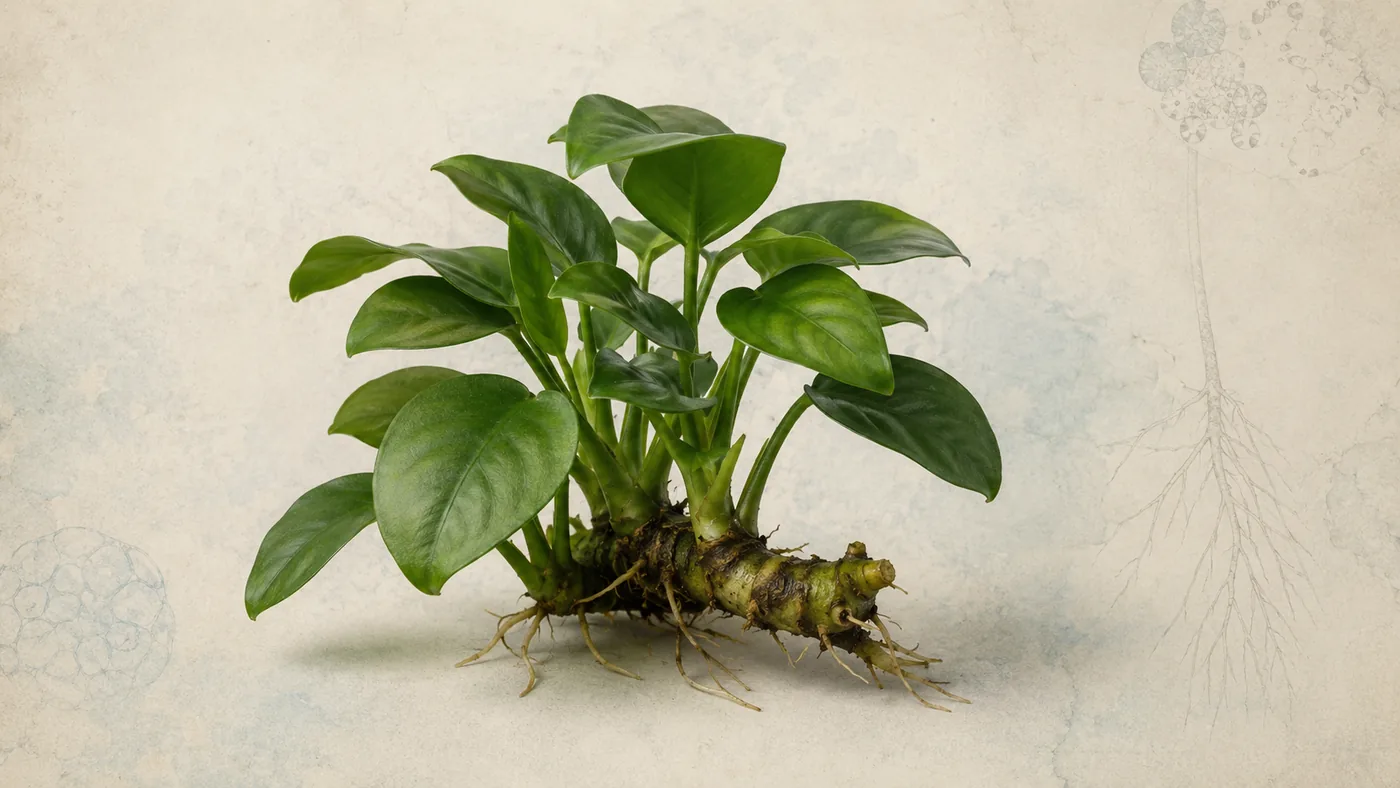
Anubias barteri var. nana (anubias nana) gives shaded hardscape a durable, living accent. It grows slowly, and that pace matters: excessive light turns its hard leaves into algae panels.
Quick read
- Type: rhizome plant for rock or wood.
- Aquarium: low-tech or stable planted tank with shaded zones.
- Indicative temperature: 20-28 C.
- pH: 6.0-7.8.
- Light: low to lower-medium.
- CO2: not required.
- Planting: rhizome always above substrate.
- Difficulty: low; the common error is burying it.
What to check before planting
Choose firm rhizomes, leaves without soft patches, and healthy roots. An old damaged leaf is not a concern; a soft rhizome is.
During adaptation, old leaves may die back while new shoots appear in a different form. Judge the growth point, not a perfect old leaf.
Planted-tank design
Attach it to wood or stone in partial shade. Use it as a stable accent, not as a plant to fill a new aquarium quickly.
The right position prevents future work: slow plants under less light, stem plants with trimming margin, and large plants where they do not block the whole aquarium.
Working parameters
It appreciates steady nutrients but does not need aggressive fertilization. Gentle flow prevents debris on the rhizome.
The plant responds to light, carbon, nutrients, flow, and stability, not to labels like low-tech or high-tech. Change one variable at a time so you can see what worked.
Compatibility and warning
It works with calm fish and shrimp. Large herbivores, goldfish, or digging cichlids may uproot it or damage leaves.
A black, soft, smelly rhizome means rot. Remove affected parts and correct burying, shade, and accumulated debris.
Reference sources
Tropica Aquarium Plants and Kew Plants of the World Online for culture, growth type, and botanical reference. Ranges are indicative and depend on light, nutrients, CO2, and the plant’s original growth form.
Topics
Newsletter
A weekly reading to see the aquatic world with clearer judgment.
Receive short, carefully edited reflections on aquatic life, ethical aquarium keeping, and applied science.
Subscribe