

The Roman Aquarium of 1887: when Rome made watching fish a cultural act
A few steps from Termini station stands a building that in 1887 turned aquarium-keeping from a private luxury into public spectacle. Its story still speaks to anyone who looks at an aquarium as an act of curiosity and care.
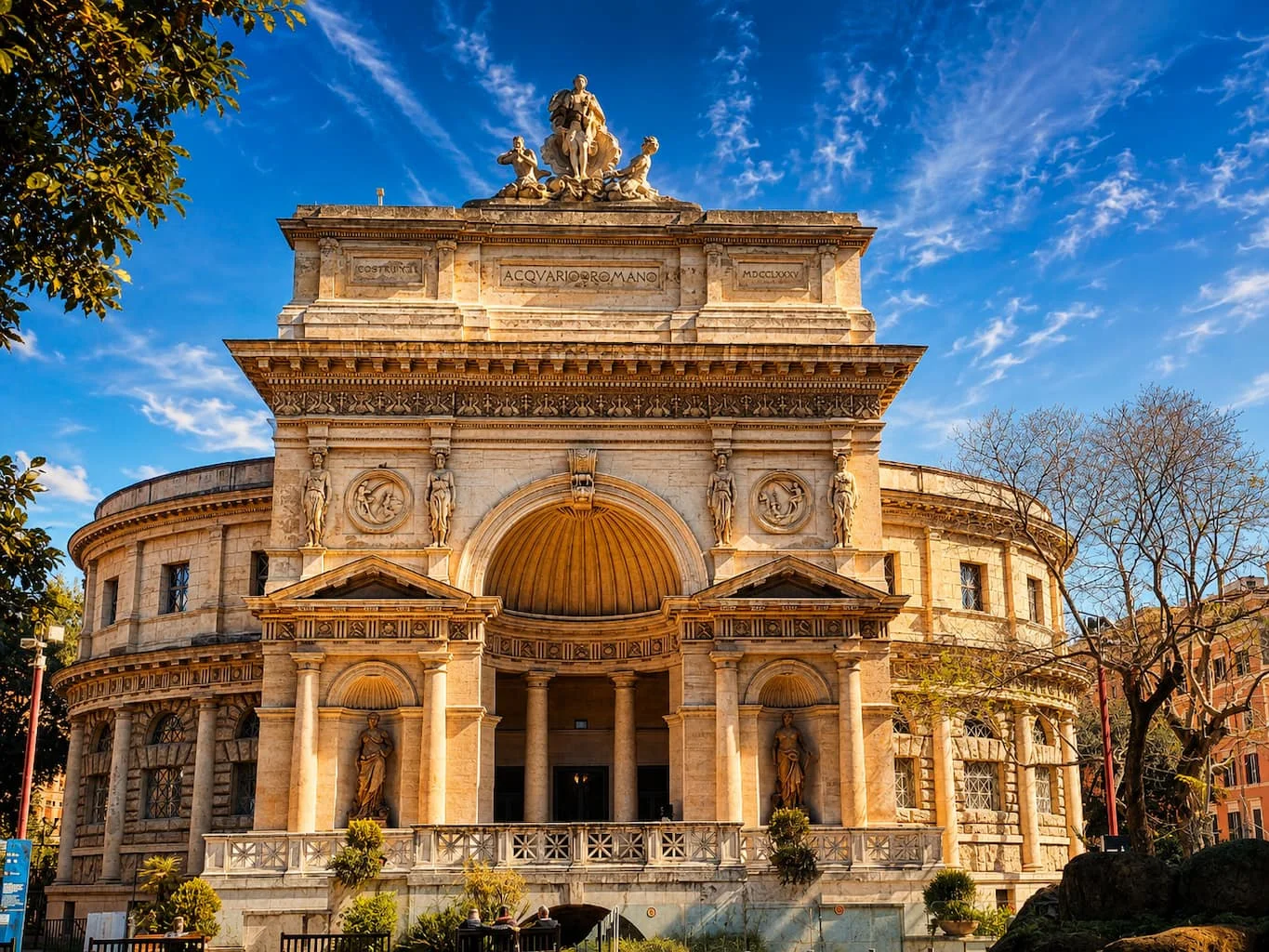
On May 29, 1887, Rome opened an unusual public building. In Piazza Manfredo Fanti, a stone’s throw from today’s Termini station, an elliptical hall with neoclassical colonnades showed visitors twenty glass tanks with octopuses, morays, crabs, and lobsters. This was the Acquario Romano: proposed by an ichthyologist, financed by construction entrepreneurs, and designed by an architect who may never have held a fish in his hands. For a few years, it gave Italy its most ambitious attempt to turn the aquarium from a hobby for the few into an urban phenomenon.
Why a Roman story still speaks to Bologna
Acquario di Bologna evokes water and attention. The brand does not sell tanks; it proposes a way of seeing the submerged world. The Acquario Romano belongs to that lineage.
In 1887, Italy was young and Rome had been its capital for only sixteen years. Pietro Garganico, an ichthyologist from Como, proposed a structure to the Municipality of Rome that would serve as fish farm, fish-farming school, recreational fishing pond, and public aquarium. He imagined more than a fairground attraction. He wanted a place where society met water through glass.
The municipality approved the project in 1882; the land concession followed on December 1, 1883. Architect Ettore Bernich, likely influenced by real-estate financiers of the Esquilino district, designed a classical building with a garden, pond, and rustic footbridges, closer to a Parisian square than an experimental station. We do not know how much Bernich understood about fish farming. Some historians argue that visual impact mattered more than function. The Acquario Romano distinguished itself through light: unlike many Continental aquariums of the era, carved into artificial caves or damp basements, this one was bright, airy, and designed for looking.
Water as popular culture
Admission was cheap, access democratic. Visitors crossed a garden where excavations had exposed Roman ruins, passed rustic footbridges, and faced columns and decorated tanks reminiscent of the Zoological Station of Naples, another milestone of Italian aquatic culture, founded by Anton Dohrn. Garganico and the builders visited the Neapolitan station to ask for technical advice. Dohrn first cooperated, then broke with the Roman project when he discovered that the new management was trying to poach Ciro Ferreoli, one of his best aquarists.
The new ownership, the Società Anonima dell’Acquario Romano, appointed Decio Vinciguerra, an ichthyologist from Genoa, as director. On May 29, 1887, the inauguration, attended by Minister Bernardino Grimaldi but not King Umberto I, opened a space where marine life entered public education and spectacle. The newspaper Il Fanfulla confirmed the presence of Tyrrhenian species: octopuses, morays, crabs, lobsters.
For a few years, that building let Rome look at the sea without going to the sea. Then it declined. The tanks lasted no more than a decade. The building became a warehouse for the nearby Opera theatre, municipal offices, and a venue for exhibitions and circus shows. From the 1930s, it served as a multipurpose storehouse. Between 1985 and 2002, restoration returned it to its original appearance; today it houses the Casa dell’Architettura.
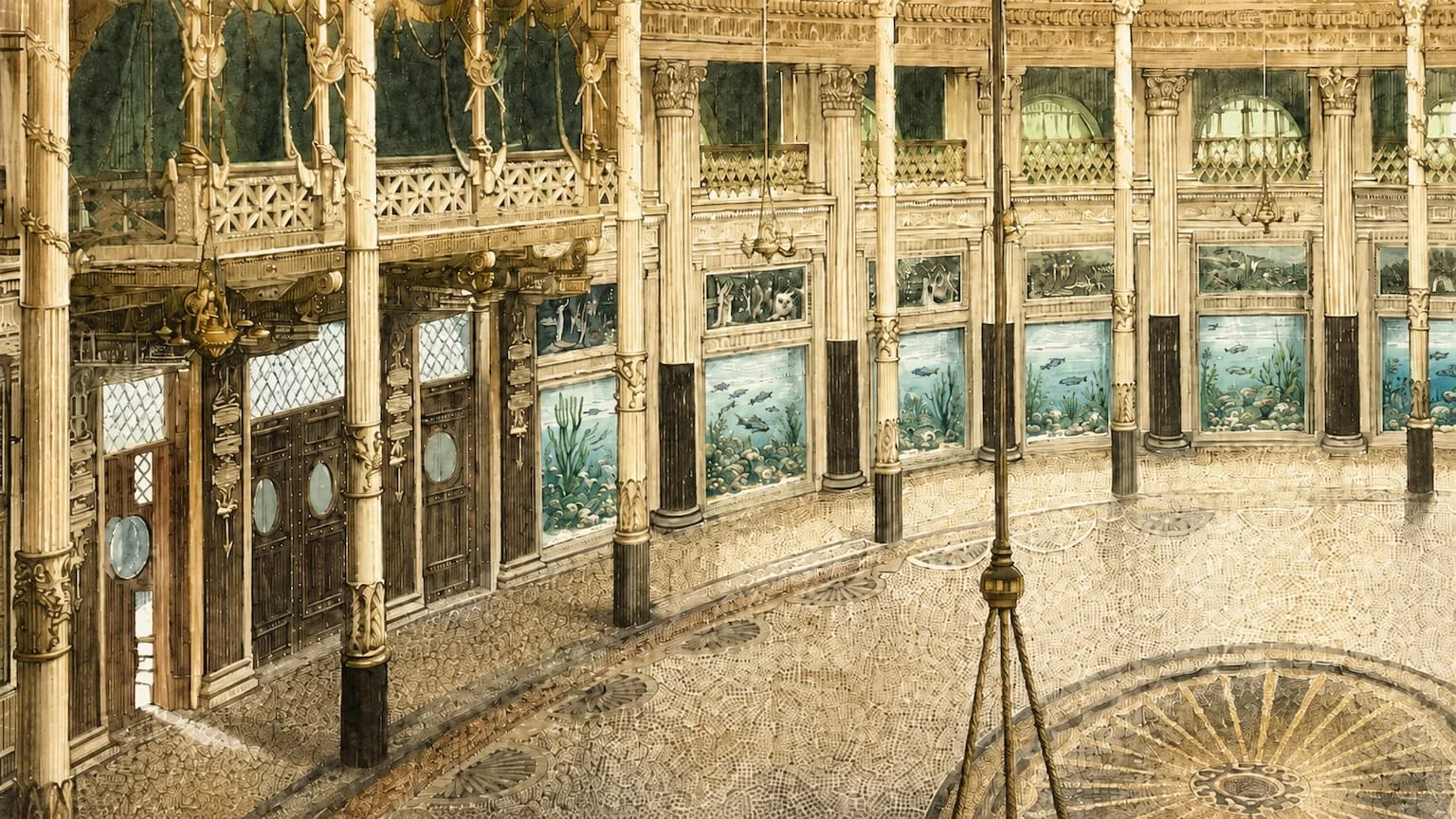
But the tanks disappeared long ago.
Glass as a decision
For us, the lasting fact is this: in 1887, a group of people decided that watching a fish through glass deserved a public space, a garden, a monumental building, and an inaugural speech. The aquarium was a cultural act.
This concerns Acquario di Bologna, its readers, and anyone who keeps a tank at home or stops to watch fish in a column of water. Choosing an aquarium involves more than interior design. It means choosing curiosity, wanting to see beneath the surface, and accepting that an aquarium changes the rhythm of the person who cares for it, the room that contains it, and the city that welcomes it.
The Acquario Romano fell into oblivion for decades. Tourists leaving Termini pass it with little notice. Many Romans do not know it exists. Its silence leaves a forceful question: if Rome in 1887 believed the aquatic world deserved a public temple, what do we owe the aquatic world today, from our own sofas?
A question for the reader
Next time you pause in front of an aquarium, at home or in a public space, ask yourself: are you seeing a beautiful scene, or a small ecosystem under your responsibility? That difference turned a Roman square into an open classroom for looking at water with greater awareness.
Primary sources: Emiliano Spada, “The Forgotten Aquarium of Rome — Part 1”, The Museum of Aquarium and Pet History, 2023; “Acquario Romano”, Wikipedia (Italian edition), consulted 2026-05-19; Horniman Museum, “Inventing the aquarium: a short history”, 2014.
Methodological note: some details regarding architect Bernich’s technical competence and the influence of real-estate financiers are hypotheses raised by historian Spada and are not primary archival documents.
Topics
Newsletter
A weekly reading to see the aquatic world with clearer judgment.
Receive short, carefully edited reflections on aquatic life, ethical aquarium keeping, and applied science.
Subscribe